
This is the kit a Brazilian churrasco uses: the fuel, the salt, the skewers, and the pantry that show up at a real fire, plus the few extra backyard tools that help on a kettle grill.
Shop links on this page: I may earn a commission. Same price for you. As an Amazon Associate I earn from qualifying purchases.
Whether you cook over coals or on gas is a different question. That question is in charcoal vs gas. This is what goes in the bag and on the table when the heat is brasa (embers, the live coals).
Checklist
- Fire: lump charcoal and a chimney
- Salt: sal grosso or a known kosher stand-in
- Knives and a cutting board
- Long flat skewers
- Instant-read thermometer
- Bowls for farofa and vinagrete
- Drinks for the table
Lump charcoal, carvão vegetal
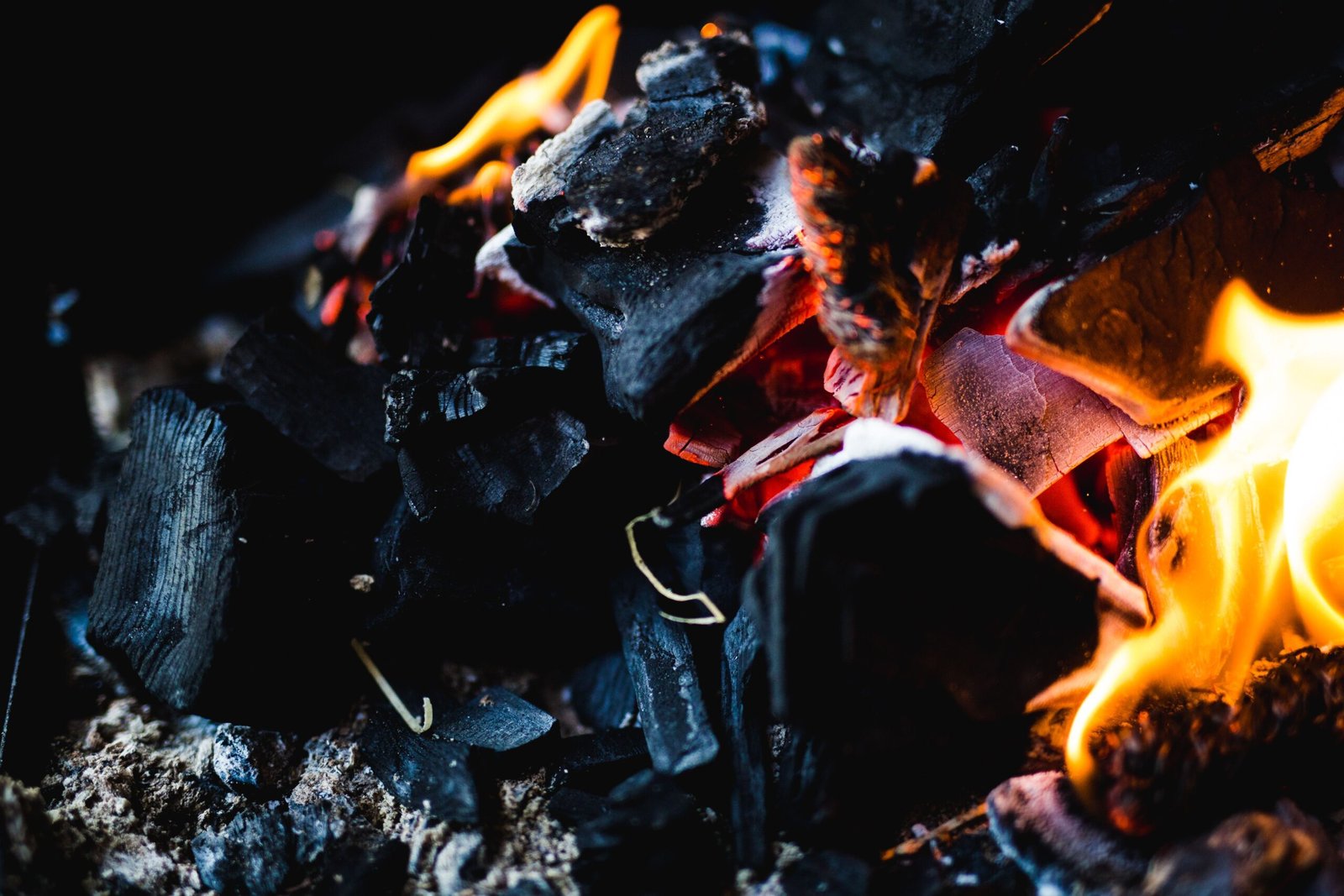
The bag at a Brazilian churrasco is lump charcoal. In Portuguese that is carvão vegetal: irregular hardwood chunks with nothing added. In Brazil the wood is often eucalyptus from planted forests, especially the commercial charcoal that comes out of Minas Gerais. The pieces are different sizes. They light hot and leave little ash.
That is the fuel a churrasqueira is built for. The US label is lump charcoal. Buy the bag of broken, uneven black chunks. The identical pillows next to it are briquettes, a different fuel.
Hardwood burned down to coals is closer to a traditional fire than bagged lump. In the south, a fogo de chão starts as wood and becomes brasa, the live coals. If you have a legal fire pit and time, burn the wood down and cook on the embers. That is the older method. Lump is still the everyday Brazilian purchase. Pellets are not a stand-in for lump. Pellets are a different fuel for a different machine.
Not briquettes
Briquetes are pressed charcoal dust and sawdust held together with binders, usually starch. They are uniform pillows. They burn cooler than lump, they last longer, and they leave more ash. That bag is common in the US. It is not what a Brazilian churrasqueira runs on.
If that is all you have, you can cook. They are still not the fire. Brazilian churrasco fire is lump charcoal (100% wood lump).
How it is lit
No lighter fluid. Fluid soaks into the fuel and the smell stays in the first meat that goes on.
In the US a chimney starter and a sheet of newspaper is the usual light. Fill the chimney with lump, stuff the paper in the base, light it, and leave it alone. In fifteen to twenty minutes the top coals have ashed over. That is when the chimney is poured.
Then wait for brasa: gray glowing embers, not flame. Meat over black charcoal or active flame picks up soot and burnt-fat flavor. That is not crust. Crust comes from dry radiant heat.
A kettle grill grate often sits around 10 cm (4 in) from the coals, closer than the 30–40 cm (12–16 in) most Brazilian beef wants, so you work two zones or raise the meat. See how far picanha sits from the charcoal.
Sal grosso
Beef at a churrasco takes coarse rock salt and nothing else. Measure 1 tablespoon, about 15 g, of sal grosso per kilogram of beef. That is the 10 to 15 g/kg range. Costela can go to about 30 g/kg. It goes on just before the fire and knock the extra off after the meat comes off. Fresh garlic pork sausage (linguiça toscana) and grilling cheese (queijo coalho) get no extra salt.
Fine table salt is wrong at those amounts. It dissolves on contact and drives straight in. Kosher salt is the US stand-in: Morton Coarse Kosher 1 tablespoon per kilogram, or Diamond Crystal 1.5 tablespoons per kilogram, not per pound. Crystal size, brand weight, and the knock-off step are in Sal grosso vs kosher salt for churrasco.
Long flat sword skewers
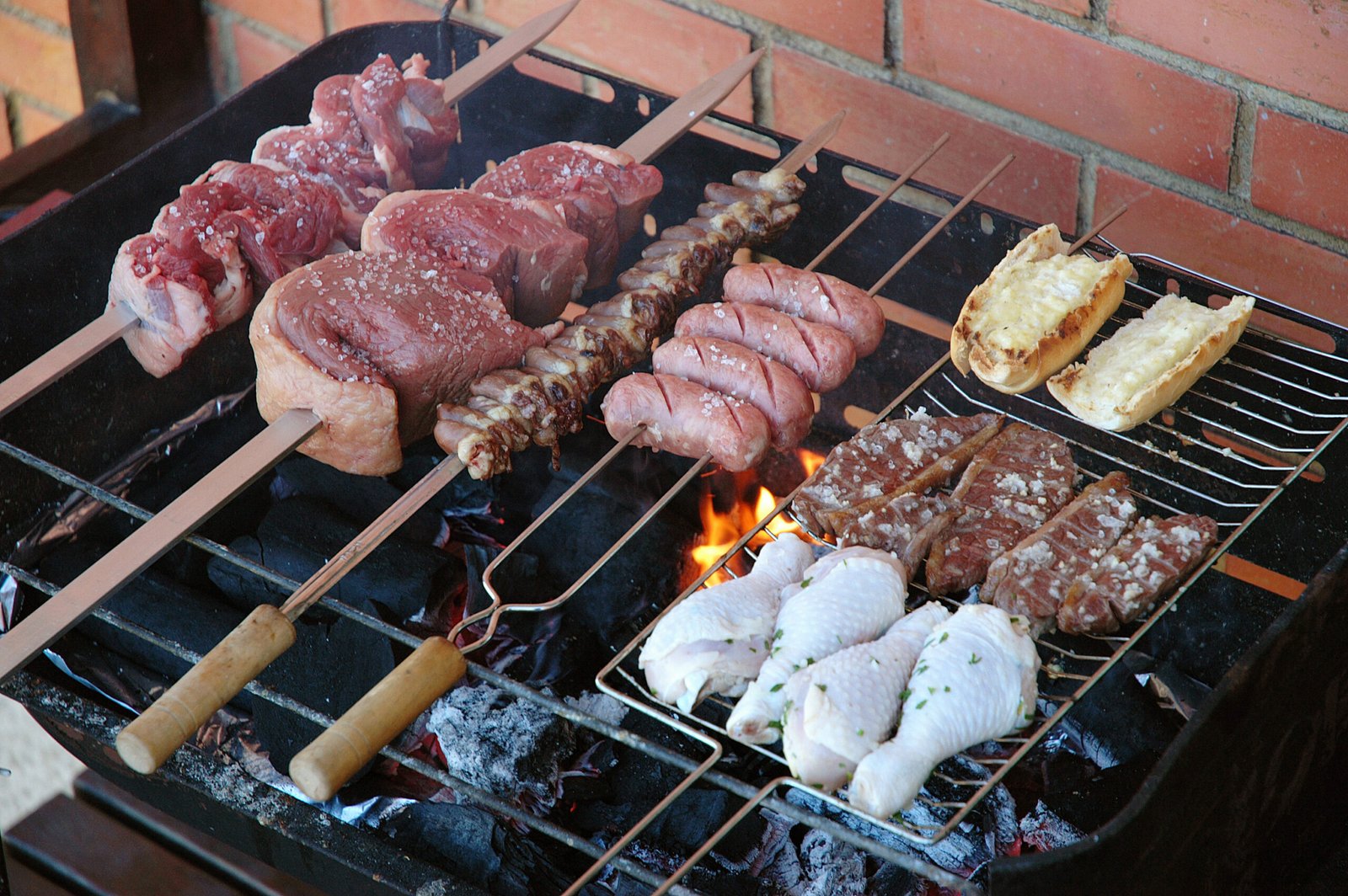
Churrasco uses long flat sword skewers, two to three feet, with a wide blade and a handle that stays out of the fire. Skip the 10-inch round kebab sticks sold for cubes.
The length lets a whole picanha sit beside the embers and turn as a unit. The flat blade keeps the meat from spinning. Short round skewers put your hand over the coals and force the meat into small pieces, which changes the cook.
Farinha de mandioca
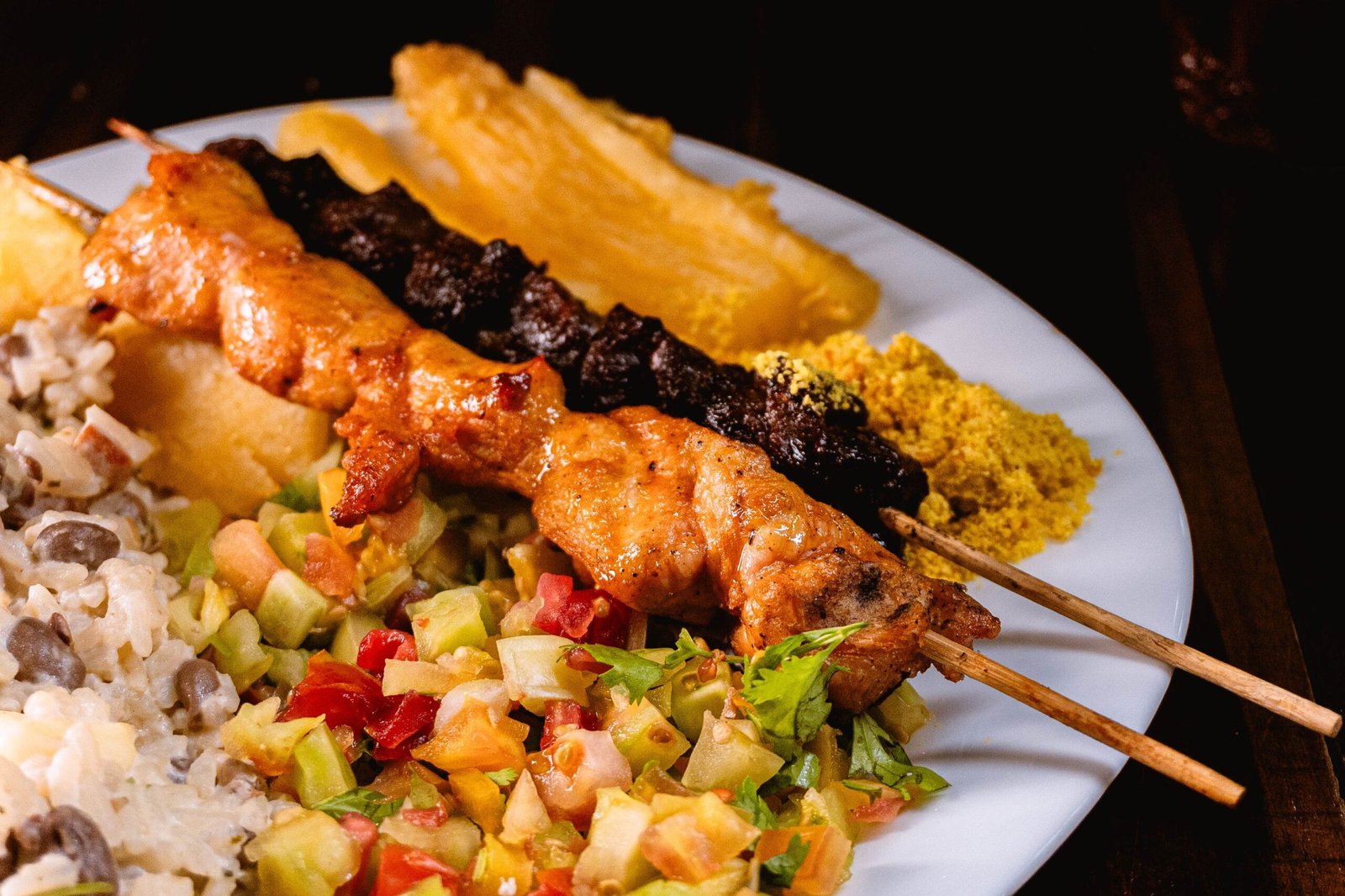
Farofa is toasted cassava flour. The flour is farinha de mandioca: dried, grated cassava, sold as a dry meal. Toast 400 to 500 g of it in 3 to 4 tablespoons of butter until it smells nutty, then people sprinkle it on the plate for texture.
It is not tapioca starch. Tapioca starch is the extracted starch, sold in the US as tapioca starch or as polvilho, and it turns gluey if you try to make farofa with it. Buy farinha de mandioca.
The vinagrete pantry
Vinagrete is diced tomato, onion, and pepper in vinegar and oil with salt. A usual bowl is 3 tomatoes, 1 onion, and 1 pepper, with 4 tablespoons oil, 2 to 4 tablespoons vinegar, 1 teaspoon salt (1 colher de chá), and parsley and green onion (cheiro-verde). That is the whole pantry. It sits on the table and people spoon it onto the plate next to the meat. It is bright and acidic. It exists to cut fat.
Vinagrete is the Brazilian table sauce.
Optional but real
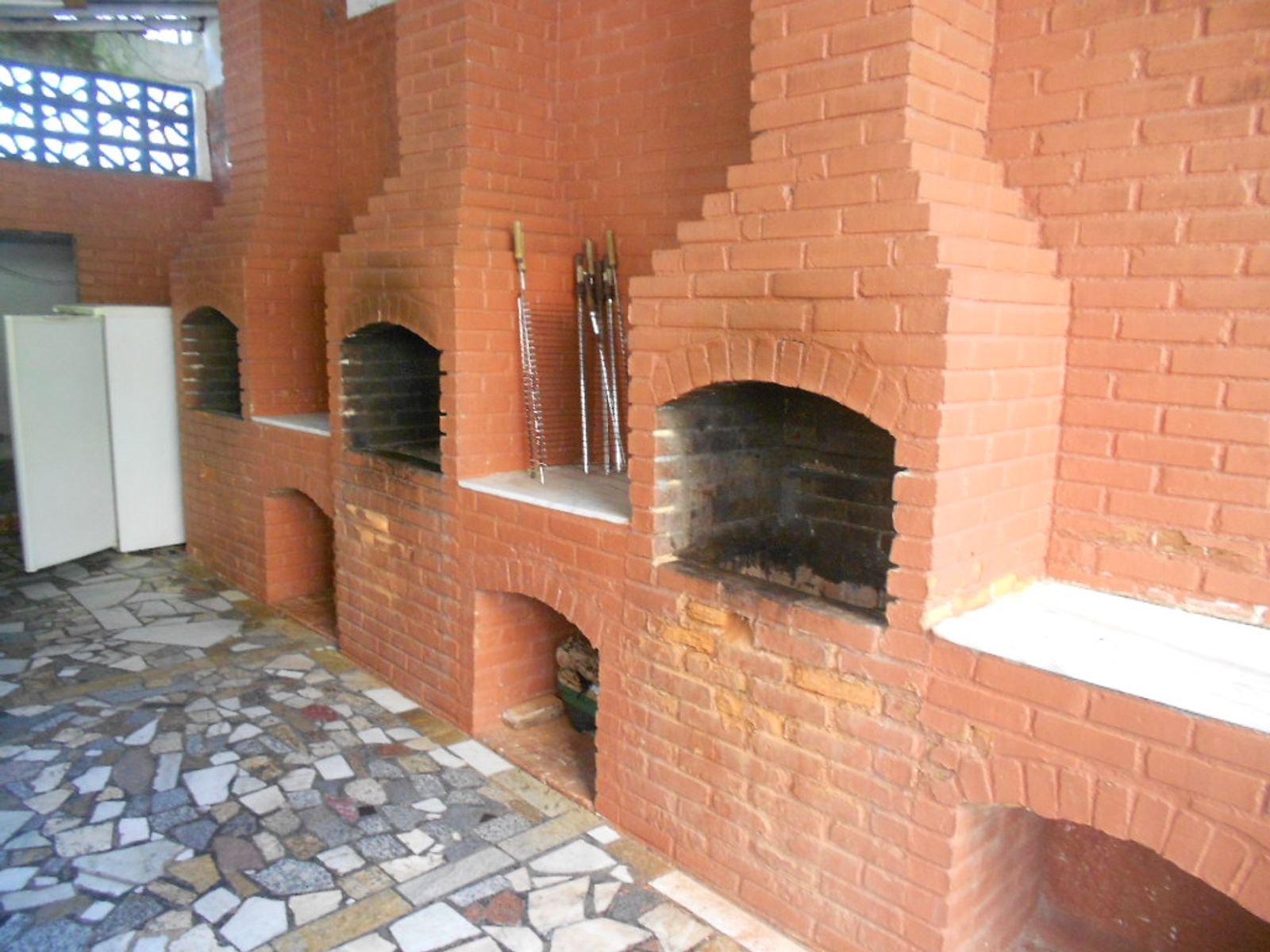
A simple grate or a churrasqueira. You do not need a restaurant rotisserie. A kettle grill with a grate works if the fire is coals. The equipment is secondary to the fuel and the salt.
Grilling cheese (queijo coalho) on a skewer. It is a firm, high-melt cheese from the northeast. It browns and softens. It does not run. Halloumi is the US stand-in, saltier and drier, not the same cheese.
Fresh garlic pork sausage (linguiça toscana) is the default grill sausage. It is pale, coarse, and raw, and it has to reach 160°F (71°C) in the center. If you cannot find toscana, mild fresh Italian sausage with little fennel works. Calabresa is smoked, red, and already cooked — it belongs in pots, not this grate.
An instant-read thermometer
An instant-read thermometer is a US home tool, not a Brazilian tradition. It still belongs in a backyard kit. Fresh sausage has a number it has to hit. Thick beef is easier to pull at 125 to 130°F (52 to 54°C) than to guess from the outside. The tradition does not require it. A backyard cook is better off owning one.
Safety instructions
Rare beef at 125 to 130°F (52 to 54°C) is below the USDA 145°F (63°C) finish. Buy whole muscle from a butcher or a named packer, and sear the outside. Higher-risk people should wait for 145°F (63°C). Ground beef stays 160°F (71°C).
What to buy
Buy once and stop thinking about it. Meat is a separate purchase. The usual mid is the one to get first in each row. The full kit is on What to buy.
Charcoal
- Low: Royal Oak lump — a named bag that lights clean in a chimney and holds a long fire.
- Usual mid: Jealous Devil lump — hot, low ash, the usual mid bag when the meat is going over coals.
- High: FOGO Premium lump — dense pieces that last; worth it when the fire has to stay alive.
Chimney
- Low: Kingsford Heavy Duty chimney — a smaller-budget starter that lights a full load, enough for an 18-inch kettle grill.
- Usual mid: Weber Rapidfire 7416 — the usual mid chimney.
- High: Not a fancier chimney — use the Weber Rapidfire 7416 and spend the extra on FOGO Premium lump.
Salt
- Low: Morton Coarse Kosher — the box that always works on the fire.
- Usual mid: Diamond Crystal kosher — lighter crystals, easier to knock off after the cook. A Brazilian-market bag of sal grosso is better when you find it.
- High: Cisne Sal Grosso — the Brazilian rock salt this fire was built around.
Skewers
- Low: Flat stainless supermarket skewers — flat so the meat does not spin; skip the thin round kebab sticks.
- Usual mid: JOWHONK 27 in flat skewers — long flat blades, the length that keeps a hand off the coals.
- High: A simple espeto set from a Brazilian shop — plain blades, no sword gimmick.
Farinha de mandioca
- Low: Julia farinha de mandioca — real cassava flour, not tapioca starch, and a bag you can actually find.
- Usual mid: Amafil farinha de mandioca — the usual mid when the Brazilian market has it.
- High: Amafil or Yoki farinha de mandioca torrada from a Brazilian grocer — the toasted bag if they stock it, not a luxury brand.
Thermometer
- Low: ThermoWorks ThermoPop 2 — fast enough to pull beef and to know a thigh hit 165°F (74°C).
- Usual mid: CHEF iQ Sense — wireless leave-in probe + hub.
- High: ThermoWorks Thermapen ONE — fast instant-read for spot checks at the fire.
Vinagrete is grocery: tomato, onion, pepper, vinegar, oil. Linguiça toscana and queijo coalho come from a Brazilian butcher or Latin shop, not a gadget list.
Next cooks
Region: Across Brazil.
Leave a Reply