
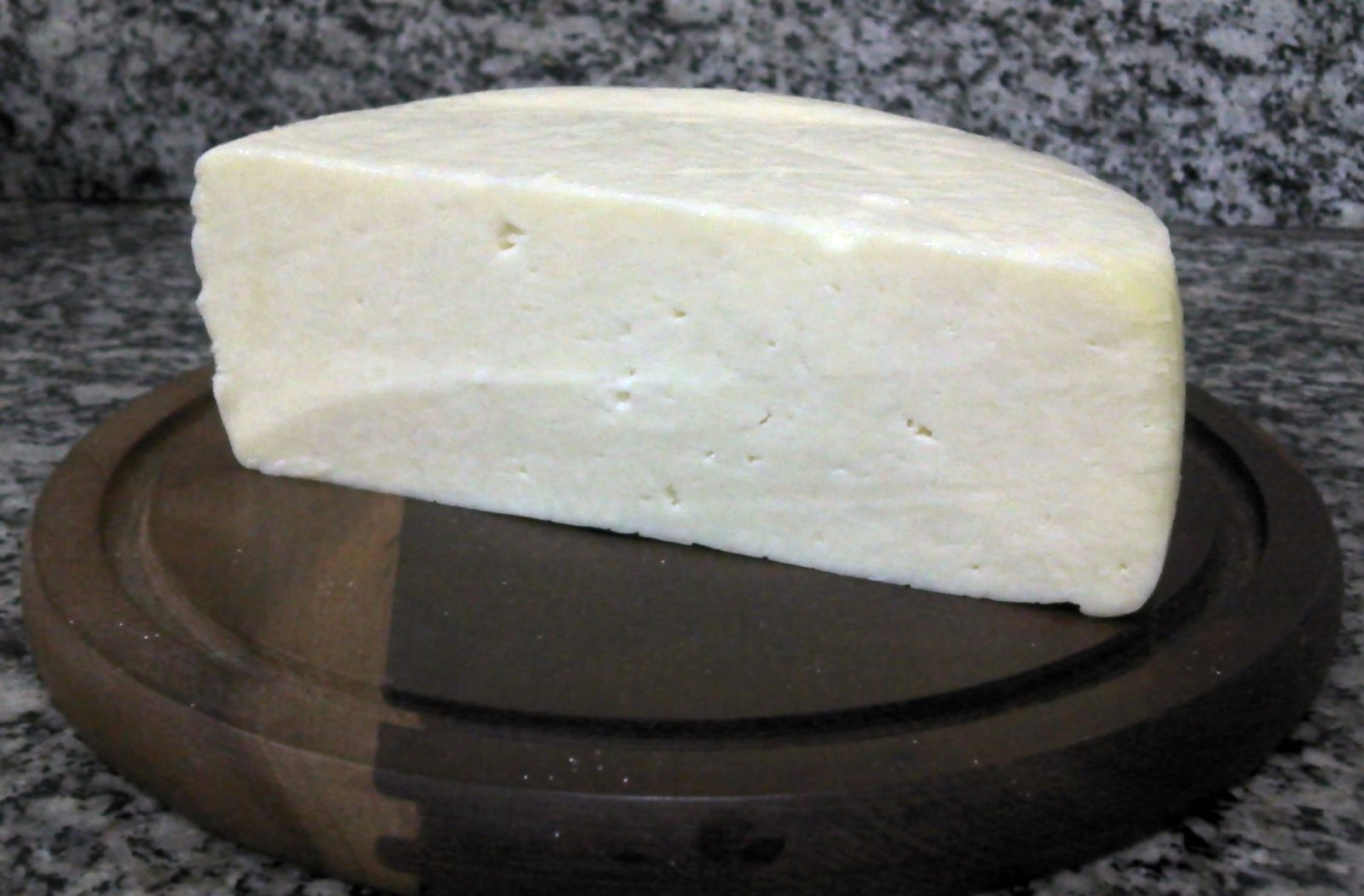
Queijo coalho is the item that surprises people most at a churrasco. It is cheese, cooked directly over fire, that browns and softens but does not run. Done right it squeaks slightly against the teeth and tastes salty and faintly sweet.
Halloumi is the US stand-in. In Spanish shops you may still see it as queso de coalho.
At a glance
- Region: Nordeste
- Yield: about 2 oz (55 g) per adult as part of a mixed table
- Time: 4 to 6 minutes, 20–30 cm (8–12 in) from the embers
- Ask for: queijo coalho or queijo de coalho. Halloumi is the stand-in, not the same cheese.
Shop links on this page: I may earn a commission. Same price for you. As an Amazon Associate I earn from qualifying purchases.
What the cheese is
Coalho is a firm, fresh rennet-set cheese from the northeast of Brazil. It has a high melting point, which is a property of how the curd is made rather than a trick of the recipe. That is why it holds its shape over heat. It is mildly salty, elastic, and squeaky, with a clean milk flavor and no aging character.
On Brazilian beaches it is sold on small sticks, grilled to order, sometimes with oregano or a drizzle of molasses. At a churrasco it goes on a skewer alongside the meat.
Where to buy it in the US
Brazilian markets carry it, usually vacuum-packed in blocks or pre-cut on wooden skewers in the freezer case. Some Latin American groceries stock it. Online grocery sellers carry it intermittently and shipping a chilled cheese is expensive, so buy locally when you can.
If the shop is empty, make the block at home: homemade queijo coalho.
Check the label. The product you want says queijo coalho or queijo de coalho. Queijo minas is a different, softer cheese that will not hold up.
Substitutes, honestly
Halloumi is the closest widely available stand-in in the US. It is a firm, high-melting-point cheese that browns on a grate the same way, and most supermarkets carry it. It is a substitute, not the same cheese. Halloumi is considerably saltier, made typically from sheep and goat milk, and has a firmer, drier bite. Coalho is milkier and milder.
If you use halloumi, rinse it under cold water and pat it dry before grilling to pull back some of the brine. Skip extra salt — it is already briny.
Other grilling cheeses, bread cheese or juustoleipa and Mexican queso para freir, also work. Mozzarella, provolone, and cheddar melt through the grate.
Ingredients
- Queijo coalho — about two ounces per adult as part of a mixed churrasco (halloumi is the closest widely available stand-in)
- Batons roughly three-quarters of an inch thick and three inches long
- 0 salt — the cheese is already salted in the making
- Optional: dried oregano; a drizzle of molasses
Cutting and skewering
- Cut the block into batons roughly three-quarters of an inch thick and three inches long. Thinner than that and the center overheats before you get color. Thicker and the outside is done while the inside is still cold.
- Pat every surface dry. Surface moisture steams instead of browning, and wet cheese sticks.
- Thread the batons onto a skewer with a little space between them, or lay them directly on a clean, well-heated grate. Long metal skewers are easier to turn as a unit and let you cook cheese and meat side by side. If you use wooden sticks, soak them.
Salt: none added
Add 0 salt to queijo coalho. The cheese is already salted in the making, and a sprinkle on top turns it harsh over the fire. The only optional finishes are dried oregano, beach-style, or a drizzle of molasses.
On a skewer
Thread the batons onto one long metal skewer, spaced a finger apart, so the whole set turns as a unit. Some cooks bend each baton into a shallow C-shape as it warms and slide it on so it grips the skewer and will not spin loose.
Keep the skewer over medium heat, well above the embers, and away from dripping fat: flare-ups scorch cheese in seconds. Turn every minute or so until several faces are golden and the surface just starts to soften. Pull it before it slumps. A sagging baton is already past done.
Beach-style dried oregano in the last minute is optional, as is a drizzle of molasses.
Cooking it
- Medium heat, not the hottest part of the fire. On a two-zone kettle grill, use the edge of the hot zone. Over a churrasqueira, hold the skewer well above the embers.
- Total time is short, roughly four to six minutes. Turn every minute or so to get color on multiple faces. You are looking for golden brown patches and a surface that has just begun to soften and blister. The center should be warm and yielding, not liquid.
How you know it is done
Golden brown patches, a surface just beginning to blister, and a center that is warm and yielding rather than liquid.
The failure mode is leaving it too long. Even a high-melting-point cheese eventually slumps and drips into the coals, so pull the batons at the first sign of sagging.
Make sure the grate is clean and hot before the cheese touches it. Cheese on a cold or dirty grate welds itself down and tears when you turn it. A wood scraper, a pumice or grill stone, or a Sage Owl one-piece stainless scraper is the safe clean. Wire bristles can break off and end up in the meat.
Seasoning and serving
Coalho is already salted in the make. Skip the coarse salt you would put on beef. A small pinch is fine if the cheese tastes flat — taste first.
Dried oregano is a common addition, sprinkled on in the last minute. Molasses or a Brazilian sugarcane syrup drizzled over hot coalho is a northeastern beach habit and it works, if you want it sweet.
Serve immediately, straight off the skewer. Coalho is only good hot. Ten minutes on a platter and it is rubbery. Cook it in small batches and bring it out while the beef is resting.
How much to buy
About two ounces per adult as part of a mixed churrasco. It is filling and it is meant as one item among several, not a course.
What to buy
Coalho from a Brazilian shop is the cheese. Halloumi is the stand-in. This page does not name a luxury coalho brand.
- Low: Wisconsin Cheese Mart Halloumi — a named block that browns; rinse it, and skip extra salt.
- Usual mid: Queijo coalho from a Brazilian or Latin shop — the real cheese, vacuum-packed in the fridge or freezer.
Leave a Reply