
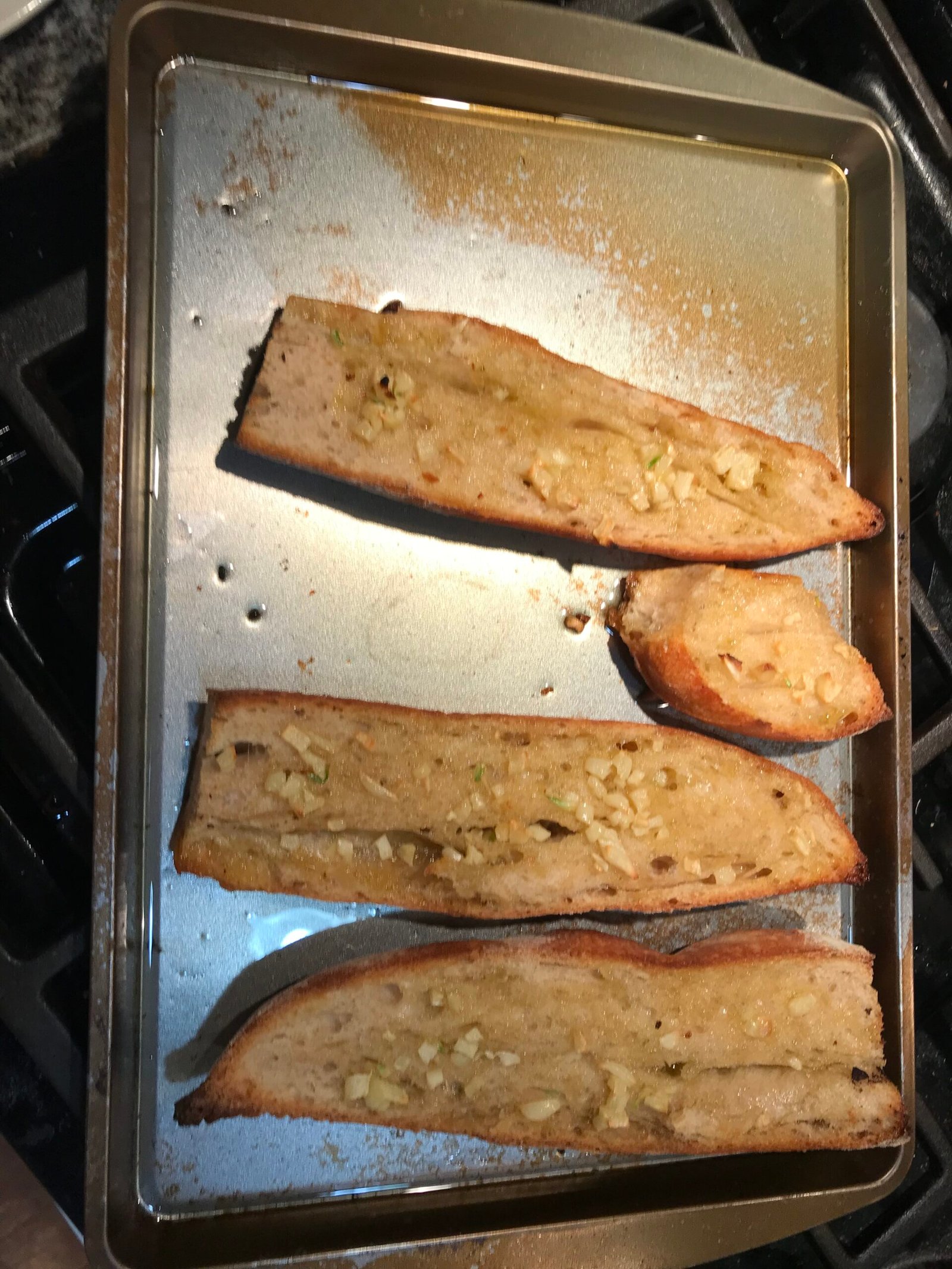
Pão de alho is the side that makes the most difference for the least work. It is garlic bread cooked on the grill. It comes off hot while the beef is resting, and it uses the space on the grate that is not holding meat.
Also called Brazilian garlic bread; in Spanish, pan de ajo.
At a glance
- Region: Sul
- Yield: one roll per two adults if there is a lot of other food; one per adult if this is the main side
- Time: about 10 minutes to pack, 6 to 12 minutes on the cool side
- Gear: soft rolls, mayonnaise–garlic–requeijão spread, foil or a long skewer
What it is
In Brazil, pão de alho is usually sold as small pre-made loaves already stuffed with a garlic butter, frozen, ready to go on a skewer. At home it is made from scratch. That takes about ten minutes and gives a better result than the frozen version.
The Brazilian home default is mayonnaise mixed with minced garlic and requeijão (Catupiry at a Brazilian shop; cream cheese is the US stand-in). That spread stays soft and rich over live fire. Accordion-cut the pão francês or bolillo and pack the spread into every slit so it steams and pulls apart rather than drying out.
A Brazilian-shop Catupiry or requeijão tub is the usual buy; homemade requeijão is the pot if the shop is empty, and US cream cheese is the fallback.
Pão de alho is a soft roll with garlic spread packed into the cuts, warmed on the cool side of the fire until the edges just catch color. It is not crisp oven garlic bread, and it is not pizza bread.
The bread
Use a soft, sturdy roll rather than a crusty artisan loaf. Brazilian pão francês is the traditional choice. In a US store, bolillo rolls, Portuguese rolls, or plain soft sub rolls all work. A baguette is acceptable but the crust gets hard over live fire.
The garlic spread
For six rolls: about 1/2 cup (120 ml) mayonnaise, six to eight cloves of garlic minced fine or pressed, 3 to 4 tablespoons requeijão or Catupiry (cream cheese is the US stand-in), a generous handful of flat-leaf parsley chopped fine, and half a teaspoon of coarse salt.
Mash everything together with a fork until it is a uniform paste. Large pieces of garlic burn on the grill and turn bitter. Taste it. It should be aggressively garlicky, because bread and heat both mute it.
Butter variant: one stick of unsalted butter at room temperature, six to eight cloves of garlic, a generous handful of flat-leaf parsley chopped fine, half a teaspoon of coarse salt, and optionally two tablespoons of cream cheese. Same mash, same accordion pack — a named variant, not the default.
A garlic press is useful here. A sharp knife and thirty seconds of work does the same job.
Two ways to cut it
Accordion cut, which is the Brazilian style: slice the roll crosswise at half-inch intervals without cutting all the way through, so it stays hinged at the bottom. Push the garlic spread into each cut. This gives you a loaf that pulls apart into soft, garlicky slices.
Split and spread, which is faster: halve the roll lengthwise, spread the garlic mixture on the cut faces, and grill cut side down. Easier to handle, less spread per bite.
A bread knife makes the accordion cut much cleaner than a chef knife does.
Cooking it
Bread burns quickly. Use the cool side of a two-zone fire, or wait until the coals have died down after the beef is off. A fresh bed of lump will burn the bread.
Keep the bread 30–40 cm (12–16 in) from the embers.
On the grate, split side: place cut face down over medium heat for two to three minutes until it is golden, then flip and give it another two to three minutes to warm through. Watch it constantly.
In foil, accordion style: wrap the packed loaf loosely in heavy-duty aluminum foil, set it on the cool side, and turn it every few minutes for about ten to twelve minutes. Open the foil for the last two minutes to get some color. Foil is the forgiving method when the grill is crowded.
On a skewer, which is the churrasqueira version: thread whole small rolls onto a long skewer and hold them well above the embers, turning. Only worth doing if the rest of the cook is already on skewers.
On the table
Put the bread on when the beef comes off to rest. It will be ready at the same moment the meat is sliced, which is the point. Pão de alho does not hold well. It goes from good to greasy and cold in about fifteen minutes.
What not to do
Cheese melted on top is a different dish. Fresh garlic has the texture this needs. Extra oil on the grate will smoke — the spread in the cuts is enough.
What to buy
A bread knife makes the accordion cut. A garlic press is optional; a knife still does that job. The usual mid is the one to get first. The full kit is on What to buy.
Bread knife
- Low: Mercer Culinary Millennia 10-inch bread knife — sharp enough for the accordion cut.
- Usual mid: Victorinox Fibrox 10.25-inch bread knife.
- High: Wüsthof Classic 9-inch bread knife — stays sharp through a lot of pão.
Garlic press, optional
- Low: KitchenAid garlic press — fine enough that the cloves do not burn on the grate.
- Usual mid: OXO Good Grips garlic press, if a press is worth buying at all.
- High: Kuhn Rikon Epicurean garlic press — heavier, easier to clean; a knife still does the job.
Leave a Reply