
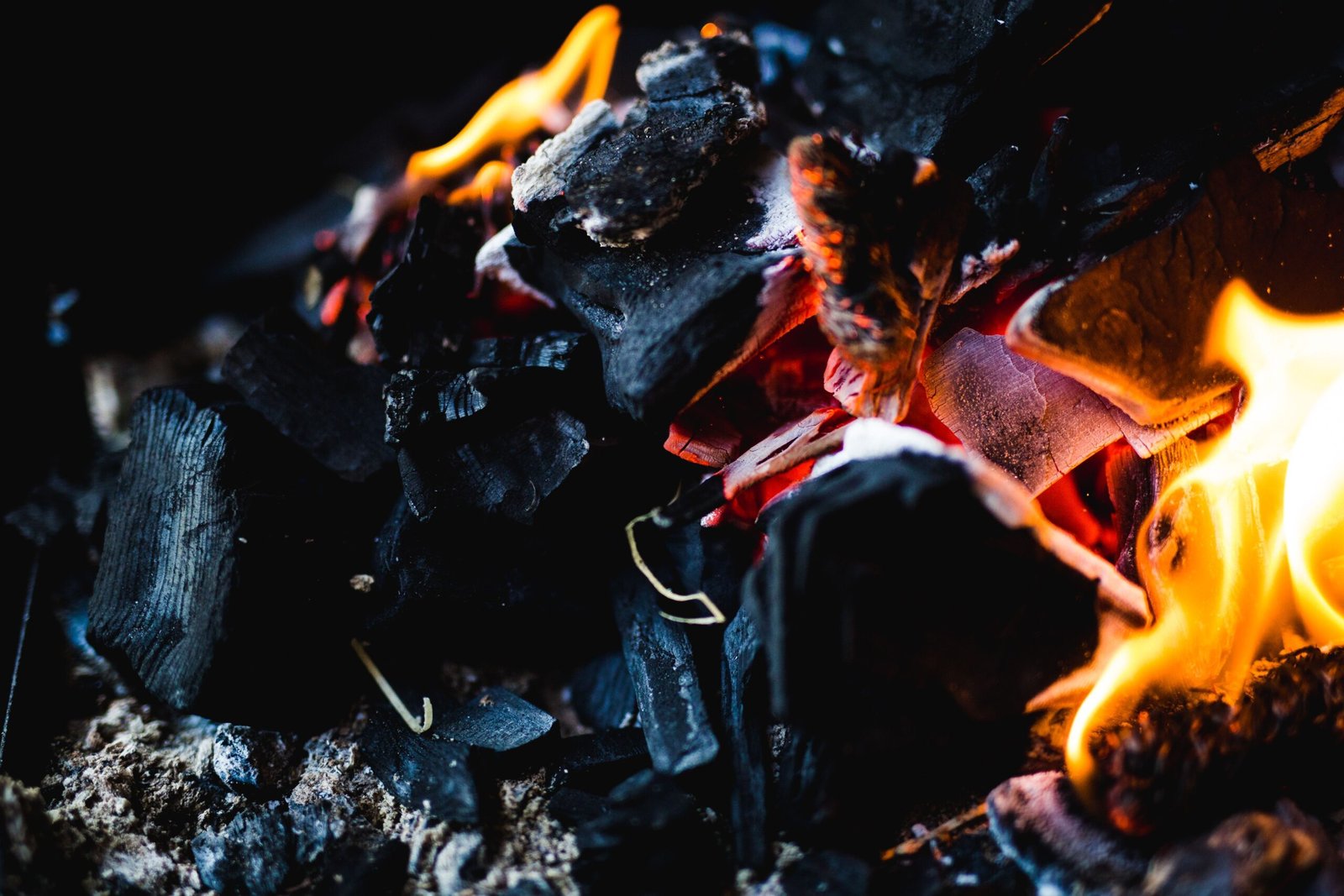
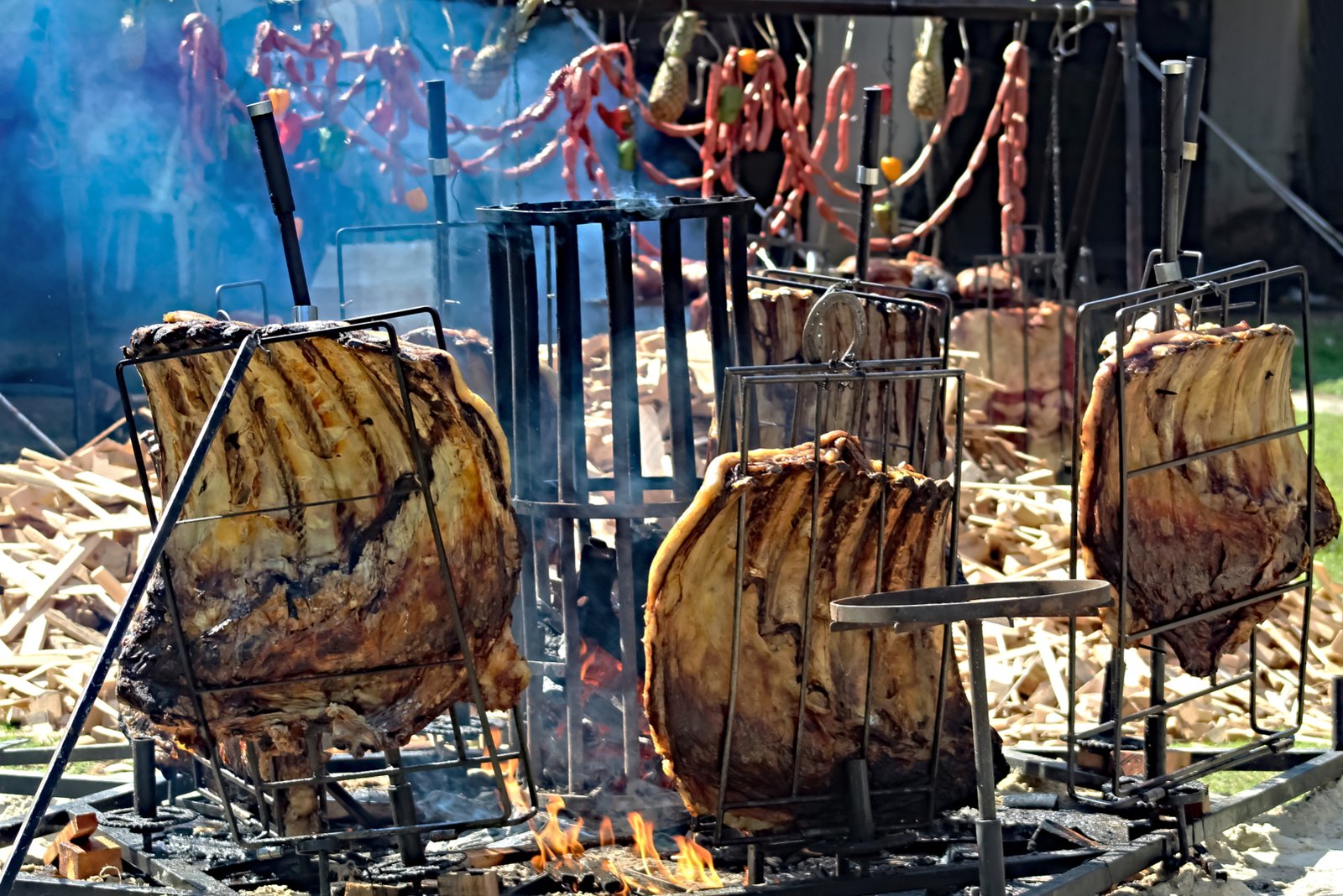
In the south of Brazil, especially Rio Grande do Sul, gaúchos cook churrasco without a grate. The brasa (embers, the live coals) sits on the ground. The meat sits on long iron skewers that are also planted in the ground, leaning toward the fire. The method is called fogo de chao, fire of the ground. Restaurant chains borrowed the name. The technique is older than the restaurants.
Shop links on this page: I may earn a commission. Same price for you. As an Amazon Associate I earn from qualifying purchases.
Safety first
- Bare earth, gravel, sand, or a legal fire pit. Not a lawn, a deck, or dry brush.
- Keep the pit away from the house, fences, and overhanging branches.
- Watch the wind. Move the skewers so flame and smoke blow away from the meat and away from the house.
- Stake each skewer deep enough that a full slab cannot fall into the fire.
- Keep water or a hose at the pit.
The layout
You build a wood or charcoal fire on bare earth, in a shallow pit, or in a ring of stones, and you let it burn down to a wide bed of embers. You do not cook over tall flames. Around that bed you drive long sword skewers or iron stakes into the dirt at an angle, so the meat faces the heat from the side, not from directly above.
The cook walks around the ring, rotates each skewer, and moves it closer or farther by pulling it out and planting it again. Distance is the control, the same idea as raising a skewer on a churrasqueira, except the rack is the ground.
What goes on the stakes
Beef plate ribs (costela) are the classic piece for this fire. Costela here is one whole slab of ribs, still on the bone, not a few short pieces and not a stew cut. When you go to the butcher, say you want plate short ribs or long beef ribs, bone in. That is how the case is usually labeled. If they only know English names, those two will get you the slab. Show them a photo of a long rack if the names do not land. Brisket and thin flanken strips cut across the bone are other cuts. A real slab can take many hours on this fire. Whole top sirloin cap (picanha), top sirloin roast (alcatra), and other big cuts also go on. Sausage and smaller pieces are a poor fit; they finish too fast and dry out while you wait on the ribs.
Beef gets coarse salt (sal grosso) only. The fat cap on picanha stays on. The heat is open and radiant.
How much salt
Sal grosso, 1 tablespoon, about 15 g (1 colher de sopa) per quilo (1 kg/ 2.2 lb) of beef, the 10 to 15 g per kg band used in Brazilian churrasco guides. For costela and other long cooks go up to 30 g per quilo, about 2 colheres de sopa per kg. In the US, 1 tablespoon Morton kosher or 1 1/2 tablespoons Diamond Crystal stands in for 1 colher de sopa of sal grosso, still per quilo, not per pound. Salt just before the meat goes to the fire and knock the excess crust off after cooking.
Distance and heat
Start the large cuts farther out, in the 40–50 cm (16–20 in) band for costela and zebu hump (cupim; no true US cut), and bring them in as the fire settles. If fat drips and the embers flare, plant the stake farther back. Flames on the meat are a mistake. Use the hand test at the face of the meat: about 3 to 4 seconds for a long rib cook, 2 to 3 seconds if you are finishing a smaller beef cut.
Turn on a schedule you can keep, every 15 to 30 minutes for ribs, more often for a smaller roast. The side facing the fire browns; the far side stays cooler. That is why the stake has to rotate.
Time
Ground-fire costela is an afternoon, not a 30-minute picanha on a kettle grill. Plan 4 to 8 hours depending on the size of the slab and how hot you keep the bed. Add wood at the edge of the fire and rake new embers toward the center so raw flame stays off the meat.
Picanha on a ground stake is faster than ribs, still slower than a grate sear. Pull beef at 125 to 130°F (52 to 54°C) for medium rare, checked with an instant-read thermometer, unless the cut is a rib you are taking to probe-tender.
Safety instructions
Rare beef at 125 to 130°F (52 to 54°C) is below the USDA 145°F (63°C) finish. Buy whole muscle from a butcher or a named packer, and sear the outside. Higher-risk people should wait for 145°F (63°C). Ground beef stays 160°F (71°C).
What you can copy at home
An open fire on bare grass is illegal or unsafe in many towns. Keep a ground fire off lawns, decks, and dry brush.
The honest copy is a contained fire pit or a ring of dirt and stone in a legal fire area, with long iron stakes or sword skewers jammed into sand, gravel, or packed dirt around the pit. The geometry is the same: embers in the middle, meat on a slant around it, turn and move.
A kettle grill cannot do this shape. Two-zone charcoal is the grate version of the same idea, not the same picture. If you want the gaucho look, you need a pit and stakes, not a lid.
Serving
Slice at the stake or on a cutting board, against the grain, in rounds, the way you would at any home churrasco. Toasted cassava flour (farofa), Brazilian tomato-onion salsa (vinagrete), and bread. This is still home cooking, not rodizio. One or two large cuts done well beat a circle of everything half-finished.
Next cooks
- The hand test for churrasco fire
- Coarse salt (sal grosso) vs kosher salt
- What picanha is and how to buy it
- Costela on the grill
- What to buy
Region: Sul.
Leave a Reply