
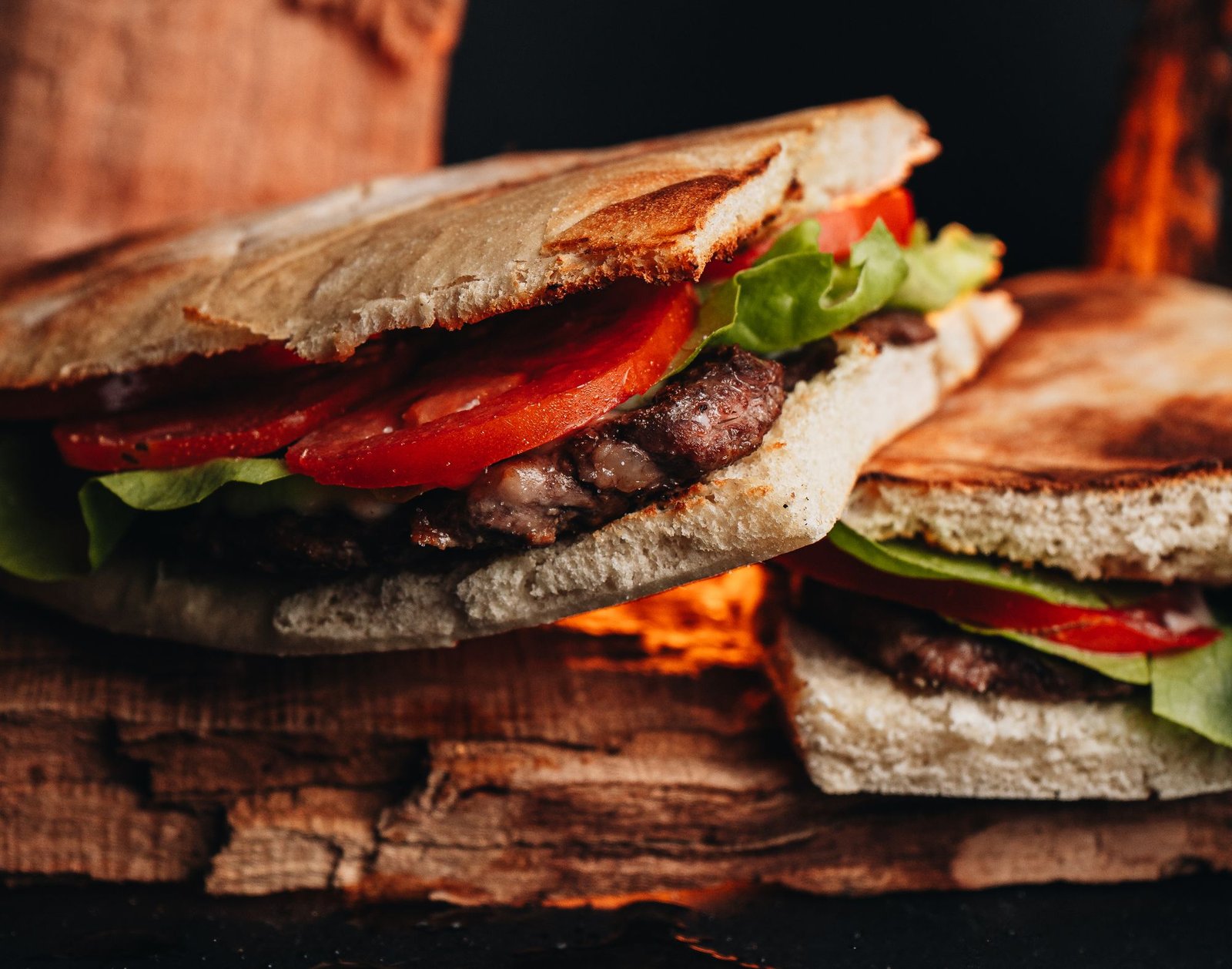
A Brazilian churrasco steak sandwich is sliced grilled beef, a soft roll, and vinagrete. In Brazil this is pão com churrasco, or sanduba de picanha when the cut is picanha. Most of the time it is leftover meat the day after a fire. Sometimes a piece of picanha is cooked for the sandwich itself. Either way, the sandwich is the meat, the bread, and the relish. It is not a sauce-on-bread steak sandwich.
Top sirloin cap (picanha) is also sold as coulotte or rump cap. Ask the butcher for top sirloin cap, and leave the fat cap on. Many Costco, Sam’s, Walmart, and Brazilian or Latin shops now label it picanha. Those warehouse packs are easy to find. They are not as high quality as a butcher piece or a named shipper. If you cannot get the cap, a thick top sirloin steak with a fat edge is the fallback. It is not as good.
This is not the Chilean churrasco
In Chile a sandwich also called churrasco is grilled steak with avocado, or palta, on soft bread. That is a different dish from a different country. The Brazilian sandwich does not use avocado. If a recipe puts palta, creamy slaw, or barbecue sauce on the roll and calls it Brazilian, that is a different sandwich.
Two honest versions
Most home cooks make this from leftover sliced picanha after a mixed churrasco. The meat is already salted and already cooked. Slice it thin against the grain with a long flat slicer, warm it only enough to take the chill off, and put it on a toasted roll with vinagrete.
The other honest version is to cook picanha for the sandwich. One common home amount is 1.5 kg picanha, 5 rolls, 20 g butter, 200 g queijo prato, and vinagrete. That is a generous fire for five sandwiches. Still portion about 4 to 6 oz (115 to 170 g) of cooked sliced beef per roll. Extra meat goes back on the table or into the next day’s leftovers.
The bread
The roll is pão francês, the everyday Brazilian bakery roll: a thin, lightly crisp crust and a soft crumb. It is not a baguette. A long crusty baguette fights the meat and sheds shards onto the plate. Skip it when you can.
In a US kitchen a bolillo from a Mexican bakery, a Portuguese roll, or a soft kaiser is a fair stand-in. The bread has to compress around the beef without cutting the roof of the mouth.
The authentic roll can be made at home. Full cook: Homemade Brazilian French rolls (pão francês).
The beef, and only coarse salt
Beef at a churrasco takes coarse salt and nothing else. No rub, no marinade, no pepper on picanha. If a fresh piece is cooked for the sandwich, use 1 tablespoon, about 15 g, of sal grosso per 1 kg of meat. That is the 10 to 15 g/kg range. It goes on just before the fire. Knock the extra off after the meat comes off. Imported sal grosso or a coarse kosher salt both work.
Leftover meat is already salted. A second coat on cold slices makes the sandwich harsh, and there is no fire left to knock the crystals off.
If you cook picanha for the sandwich
Cut picanha into steaks two or three fingers thick, fat cap left on. A finger here is a home measure, roughly 3/4 to 1 1/4 inches (2 to 3 cm). Whole-cap picanha in the US is usually 2 1/2 to 3 1/2 pounds; 1.5 kg is about 3.3 pounds, one solid piece. Buy the cap with the fat intact and cut it yourself.
Sear the fat cap and the meat faces first over a hot bed, then finish over medium embers. The goal is a browned surface and a pink center, not a gray slab. On a kettle grill that means a two-zone fire: color over the coals, then the cool side until the center is ready. An instant-read thermometer is useful on a thick steak. Pull picanha around 125 to 130°F (52 to 54°C) for medium rare. Rest it, knock the loose salt off, then slice thin against the grain for the sandwich. Thick cubes do not sit in a roll.
Safety instructions
Rare beef at 125 to 130°F (52 to 54°C) is below the USDA 145°F (63°C) finish. Buy whole muscle from a butcher or a named packer, and sear the outside. Higher-risk people should wait for 145°F (63°C). Ground beef stays 160°F (71°C).
A long skewer is the Brazilian picture if you are cooking the whole cap in a C. For sandwich steaks on a grate, the skewer is optional. The salt, the fat cap, and the two-stage fire are not.
Vinagrete for 4 to 5 sandwiches
Vinagrete is the relish. This amount covers four or five rolls.
- 2 ripe tomatoes, seeded and diced
- 1 onion, diced
- 1 yellow or green bell pepper, diced
- A handful of cheiro-verde, parsley and green onion, chopped
- 4 tablespoons olive oil (4 colheres de sopa)
- 2 tablespoons vinegar (2 colheres de sopa)
- Juice of 1/2 lime
- 1 teaspoon salt (1 colher de chá)
Seed the tomatoes so the relish does not flood the bread. Mix and let it sit while the meat rests. Cold vinagrete is correct. A light sauté of the vegetables on the grill griddle is also correct. Use whichever matches the fire already going.
Toast the rolls, then build
Split the rolls. Butter the cut faces. 20 g butter for 5 rolls is a thin film, not a garlic-bread coat. Toast them on the cool side of the grill until the crumb is warm and the edge takes a little color. Do this while the meat rests. A hot roll that is still soft in the middle is the point.
Lay on the sliced beef, about 4 to 6 oz (115 to 170 g) cooked weight per sandwich. If the meat was cooked for this, melt 200 g queijo prato over the pile for five rolls, or a mild white melting cheese or provolone if that is what the US store has. The leftover-only version can skip the cheese. The sandwich is still complete with meat, bread, and vinagrete.
Spoon vinagrete over the meat, not under it, so the bread stays intact long enough to eat. Close the roll and eat it while the beef is still warm.
Other leftover meats, and mayonnaise
Picanha is the cut people ask for. It is not the only leftover that works. Contrafilé, alcatra, or fraldinha from the same fire all belong in this sandwich, with pão francês, vinagrete, melted cheese, and optional mayonnaise. Slice them the same way, thin, against the grain.
Mayonnaise is optional — a thin smear on one face of the roll. Vinagrete is the relish.
What does not go on this sandwich
No barbecue sauce. No avocado. No creamy slaw. Those three turn it into a different sandwich. The Brazilian version is salted beef, a soft roll, vinagrete, and, if you want it, a mild melting cheese.
Leftovers and food safety
Refrigerate leftover cooked beef within 2 hours of the fire. Use it in 3 to 4 days. Warm the slices briefly in a hot pan, or serve them cold on the toasted roll. A second full cook takes a medium-rare cut to gray.
Next cooks
- How to grill picanha on a kettle grill
- Farofa and vinagrete
- Homemade Brazilian French rolls (pão francês)
- Pão de alho
Region: Sul.
Leave a Reply