

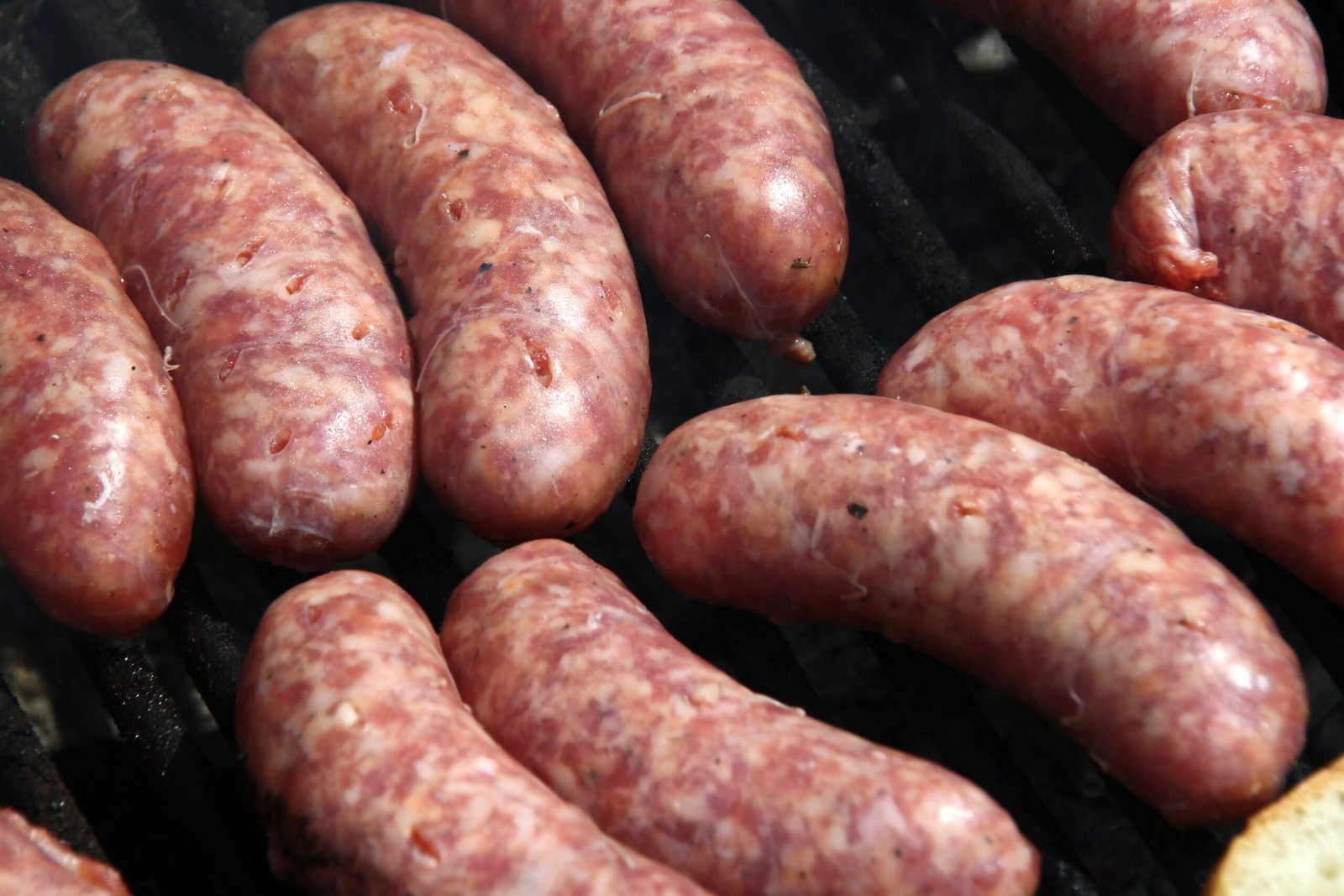
If you cannot find Brazilian linguica where you live, you can make it. Fresh garlic pork sausage is one of the easier things to produce at home because it is not cured, not smoked, and not fermented. It is ground pork, garlic, and salt, mixed properly and cooked through.
Shop links on this page: I may earn a commission. Same price for you. As an Amazon Associate I earn from qualifying purchases.
Safety instructions
Cook sausage until the center is 160°F (71°C). Pink pork sausage is still raw.
What you are making
This is linguica toscana, the fresh sausage used at churrasco. It is not Spanish dry chorizo, which is cured and dominated by pimenton and is sliced without cooking. It is not hot Italian sausage, where fennel is the defining flavor. Garlic is the defining flavor here. Weighed Brazilian recipes sit at 4 to 6 g garlic per kilogram. This house pot is heavier. That is the house batch, not the 5 g/kg line.
Because it is fresh pork, it must be refrigerated and cooked through. Nothing in this recipe preserves it.
Ingredients for 5 pounds
- 5 pounds (2.3 kg) pork shoulder, with its fat, cut into 1 inch cubes
- 2 to 3 whole heads of garlic, cloves peeled and minced very fine, about 3/4 cup (180 ml)
- 36 g coarse salt (16 g per kilogram of pork). That is about 2 1/2 tablespoons Morton kosher, or a scant 4 tablespoons Diamond Crystal
- 1 tablespoon (15 ml) fresh cracked black pepper
- 1/2 cup (120 ml) dry white wine, or 1/4 cup (60 ml) white wine vinegar
- 1 tablespoon (15 ml) sweet paprika, optional, mostly for color
- Hog casings, about 10 feet (3 m), rinsed and soaked
Pork shoulder at its natural fat ratio, roughly 25 to 30 percent fat, is right. Loin is too lean and makes a dry, crumbly sausage. Extra fatback is only for a shoulder that was trimmed unusually lean.
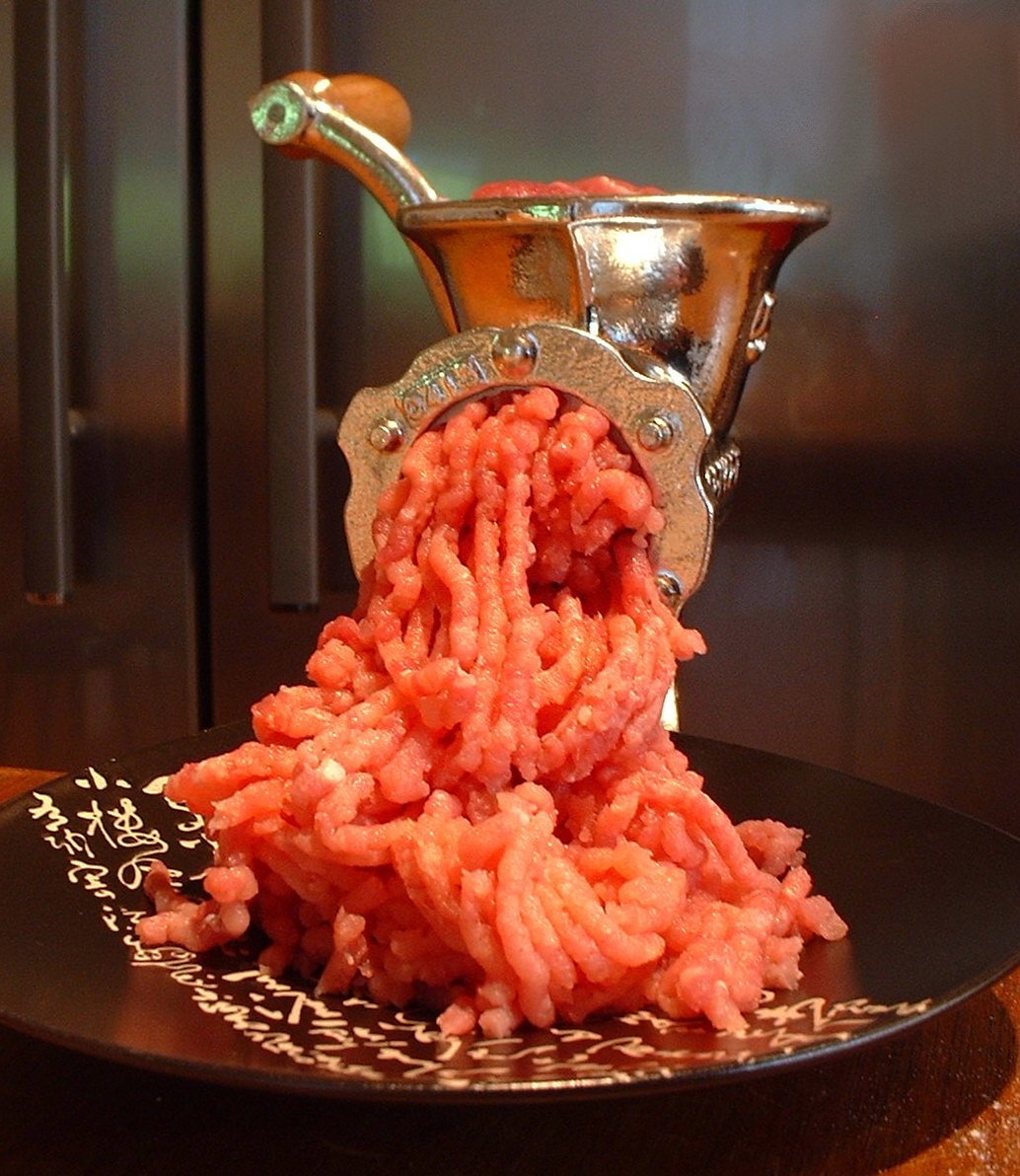
How to grind the meat, keep fingers out of the hopper, and the safe finish: How to grind beef and pork at home (carne moída).
Grinding
Temperature is the only difficult part of sausage making. Put the cubed pork on a sheet pan in the freezer for 30 to 45 minutes until the edges are firm and there are ice crystals at the surface but the center is not frozen solid. Chill the grinder parts too.
Warm fat smears rather than cutting cleanly, and smeared fat renders out on the grill and leaves a dry sausage. If at any point the meat looks pasty or the fat looks like it is streaking, stop and put everything back in the freezer for twenty minutes.
Grind through a coarse plate, about 3/8 inch (1 cm). Brazilian linguica is coarse. A single coarse grind is correct, and grinding twice makes it too fine.
Mixing
Add garlic, salt, pepper, paprika, and wine to the cold ground pork. Mix with your hands or a paddle for one to two minutes, until the mass turns slightly tacky and holds together when you press a handful. That tackiness is protein binding and it is what keeps the sausage from crumbling.
Stop there — past that point the texture turns rubbery. Two minutes is enough.
Cook a small patty in a skillet and taste it. Adjust salt and garlic now, while you still can. Raw sausage always tastes less salty than cooked.
Stuffing, or not
Soak hog casings in warm water for at least 30 minutes, rinse the insides by running water through them, and slide them onto the stuffer horn. Stuff with the meat cold. Fill firmly but not tight, because you need slack to twist links without bursting them.
Twist into links of five or six inches, alternating direction each time. Prick any obvious air pockets with a pin. Leave the rest of the casing intact so the juices stay in.
If you have no stuffer, roll the mixture into skinless logs about an inch and a half thick, wrap each tightly in plastic wrap, and chill overnight so they hold shape. They will grill acceptably if you handle them gently. Be clear with yourself that this is a home workaround. Without a casing you lose the snap and some of the moisture, and it is not the butcher product.
Patties are the other honest fallback and they cook faster and more evenly than logs.
Resting
Refrigerate uncovered or loosely covered overnight. The garlic distributes, the salt penetrates, and the casings dry slightly, which helps them brown. Sausage cooked the same day tastes raw-garlicky and sharp. This step is worth the wait.
Use within three days or freeze. Fresh sausage freezes well for a few months.
Grilling it
High direct heat splits the casing, dumps the fat into the coals, and leaves the center raw. On a two-zone kettle grill the links live on the cool side. The full cook is on linguiça on the grill.
Color lies on fresh pork sausage. Use an instant-read thermometer (options to buy).
Give it one final minute over the hot side for color if it looks pale. Rest two minutes, slice into thick coins, and serve with toasted cassava flour (farofa) and Brazilian tomato-onion salsa (vinagrete).
Method
- Put the cubed pork on a sheet pan in the freezer for 30 to 45 minutes until the edges are firm. Chill the grinder parts too.
- Grind through a coarse plate, about 3/8 inch (1 cm). A single coarse grind is correct.
- Add garlic, salt, pepper, paprika, and wine to the cold ground pork. Mix for one to two minutes, until the mass turns slightly tacky.
- Cook a small patty in a skillet and taste it. Adjust salt and garlic now.
- Soak hog casings in warm water for at least 30 minutes, rinse the insides, and stuff with the meat cold. Twist into links of five or six inches.
- Refrigerate uncovered or loosely covered overnight.
- Grill over medium heat, 35–40 cm (14–16 in) from the embers. Turn every few minutes. Total time is usually 15 to 25 minutes. Cook to 160°F (71°C) internal at the center of the thickest link.
How you know it is done
The center of the thickest link reads 160°F (71°C) and the cut face shows no pink.
Make-ahead
Refrigerate uncovered or loosely covered overnight. Use within three days or freeze.
Next cooks
What to buy
A coarse grind and hog casings. Skinless logs are the honest fallback if you have no stuffer. The usual mid is the one to get first.
Grinder
- Low: KitchenAid metal food grinder attachment — honest if you already own the mixer.
- Usual mid: LEM Big Bite #8 grinder — the dedicated grinder people actually keep using.
- High: LEM Big Bite #12 — faster on a 5-pound batch, same company.
Casings
- Low: Hog casings from a butcher, 32–35 mm, about 10 feet — ask the counter.
- Usual mid: The Sausage Maker hog casings — packed and ready, the mail-order default.
- High: LEM hog casings — same job as Mid, from the grinder company if you are already ordering there.
Leave a Reply