
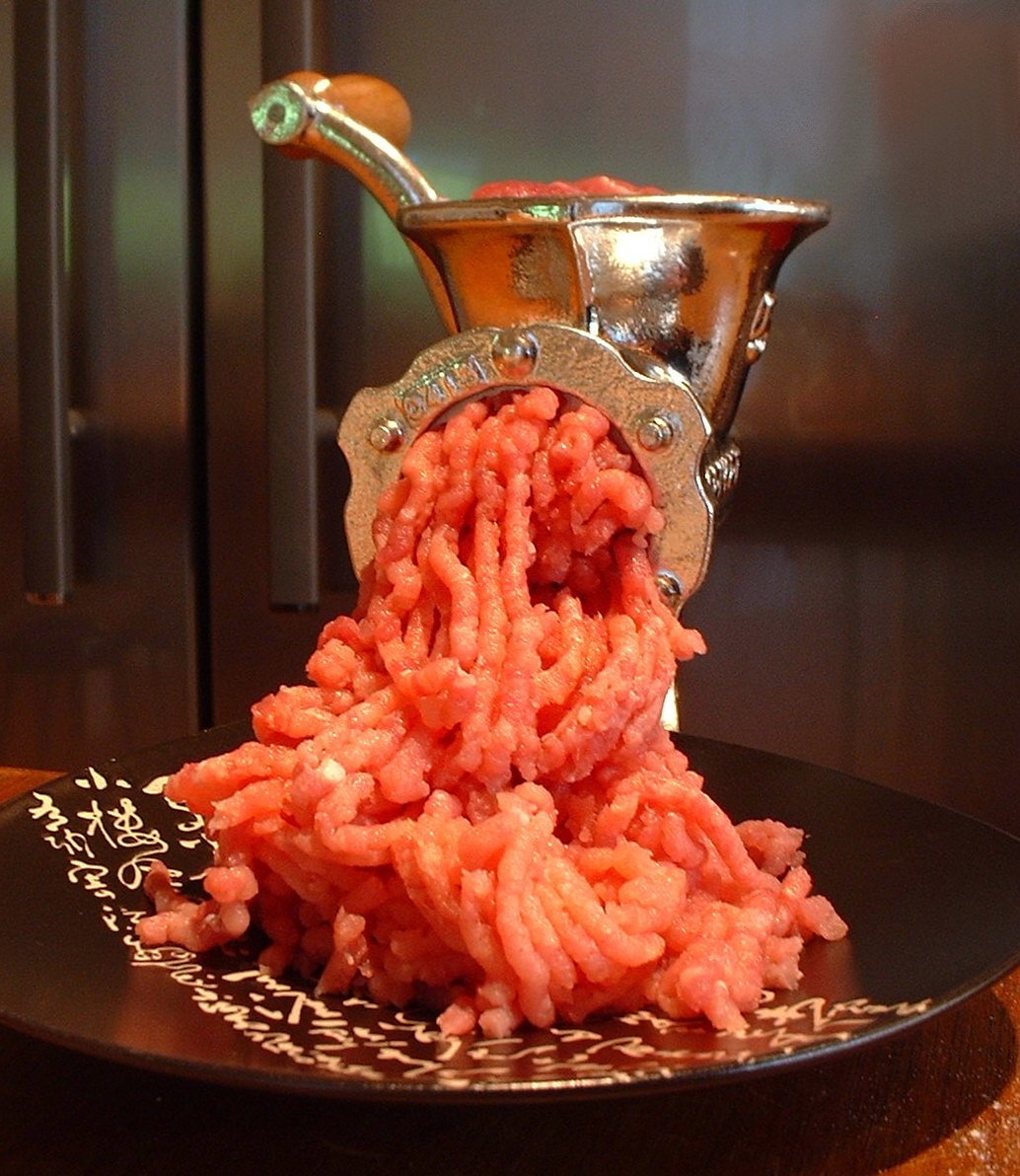
Ground beef and ground pork (carne moída) for this site means meat you grind at home from a whole piece, then cook through. The one live cook that needs a grind is homemade Brazilian garlic sausage (linguiça toscana). A store tray of ground beef is the fallback when there is no grinder. It is not a churrasco cut and it does not replace picanha on the fire.
Shop links on this page: I may earn a commission. Same price for you. As an Amazon Associate I earn from qualifying purchases.
Why grind it at home
A home grind lets the cook set the fat, keep the meat cold, and season it in the same hour. That is how linguiça toscana is made: pork shoulder, garlic, and salt. Store ground beef is already mixed and warms on the way home. Use it the same day, or freeze it.
Safety instructions
Ground meat has more surface than a steak, so it has to cook all the way through. The US safe finish for ground beef and ground pork is 160°F (71°C) at the center, checked with a clean instant-read thermometer (options to buy). Color is not a test. Pink can still be under, and brown can already be done.
Keep the meat at or under 40°F (4°C) until it goes in the grinder. Cube it, then freeze the cubes 30 to 45 minutes until the edges are firm and there is ice on the surface, but the center is not a solid block. Chill the grinder parts in the freezer too. Warm fat smears, and the grind warms above 40°F (4°C). Between 40°F and 140°F (4°C and 60°C) bacteria grow fast.
Wash hands, the board, the knife, and every grinder part in hot soapy water before and after. Wash the plates before poultry if you already ground beef or pork. Raw ground meat stays in the fridge. Two hours on the counter is the limit, or one hour if the room is hot. Use a home grind within 1 to 2 days, or freeze it. Thaw in the fridge, not on the counter.
Keep fingers, a fork, and a knife out of the hopper while the motor is on. Feed the cubes with the stomper or pusher that came with the grinder. If meat sticks, switch the motor off and unplug it, then clear the hopper. Unplug before changing plates or washing the parts. Long hair and loose sleeves stay out of the way.
Skip tasting raw ground meat. Fry a small patty if the batch needs a salt check, as on the linguiça cook, then cook that patty to 160°F (71°C) too.
What to buy (the meat)
Ask a butcher, or take a tray from Costco, Sam’s, or a similar warehouse or grocery store.
- Beef: chuck, about 20 to 25 percent fat. Lean sirloin or round makes dry carne moída.
- Pork: shoulder, about 25 to 30 percent fat. That is the cut for linguiça. Loin is too lean.
A Brazilian or Latin market may grind a piece to order. That is still a grind, so keep it cold and cook it through. Skip a gray, warm, or leaking tray.
What to buy (the grinder)
A dedicated grinder is the usual mid. A mixer attachment is enough for a small batch if that mixer is already in the kitchen.
- Low: KitchenAid metal food grinder attachment
- Usual mid: LEM Big Bite #8
- High: LEM Big Bite #12
A small home grind
- 2 lb (900 g) beef chuck or pork shoulder, in 1-inch cubes, very cold
- Optional, only if this grind is for the table and not for linguiça: 1 teaspoon (5 g) fine salt, mixed in after the grind
For linguiça, skip this salt. Use the sausage batch and the garlic on homemade Brazilian garlic sausage (linguiça toscana).
Method
- Cube the meat. Spread it on a sheet pan. Freeze 30 to 45 minutes, until the edges are firm.
- Chill the grinder plate, blade, and hopper in the freezer for the same time.
- Fit a coarse plate, about 3/8 inch (10 mm). That is the grind for linguiça and for a coarse carne moída.
- Grind the cold cubes in a steady stream. Push them with the stomper, not with fingers. If the fat looks smeared or the meat looks pasty, stop. Freeze the meat and the parts another 20 minutes, then continue. If it jams, switch off and unplug before reaching in.
- A single coarse grind is enough. A second pass makes a finer paste. That is not the sausage grind.
- If this meat is for the table, mix in the salt now. If it is for linguiça, move to that cook.
- Cook the same day, or pack it flat, label it, and freeze it.
How you know it is done
On the fire or in a pan, the center of a patty, a skinless log, or a stuffed link is 160°F (71°C). Rest a minute. Juices can still look a little pink even when the thermometer is right. Trust the number.
When it goes on the table
Linguiça goes on with the other meats, 35 to 40 cm (14 to 16 in) from the embers. Check the heat with the hand test. Carne moída in a pan is a home pot, not the center of a churrasco. Keep raw trays off the cutting board used for cooked meat.
What to leave out
No extra fatback on a normal pork shoulder. No fennel in a Brazilian toscana grind. No store hamburger as a stand-in for picanha. No fingers in a running hopper. No tasting the raw mix. No room-temperature thaw.
Leave a Reply