
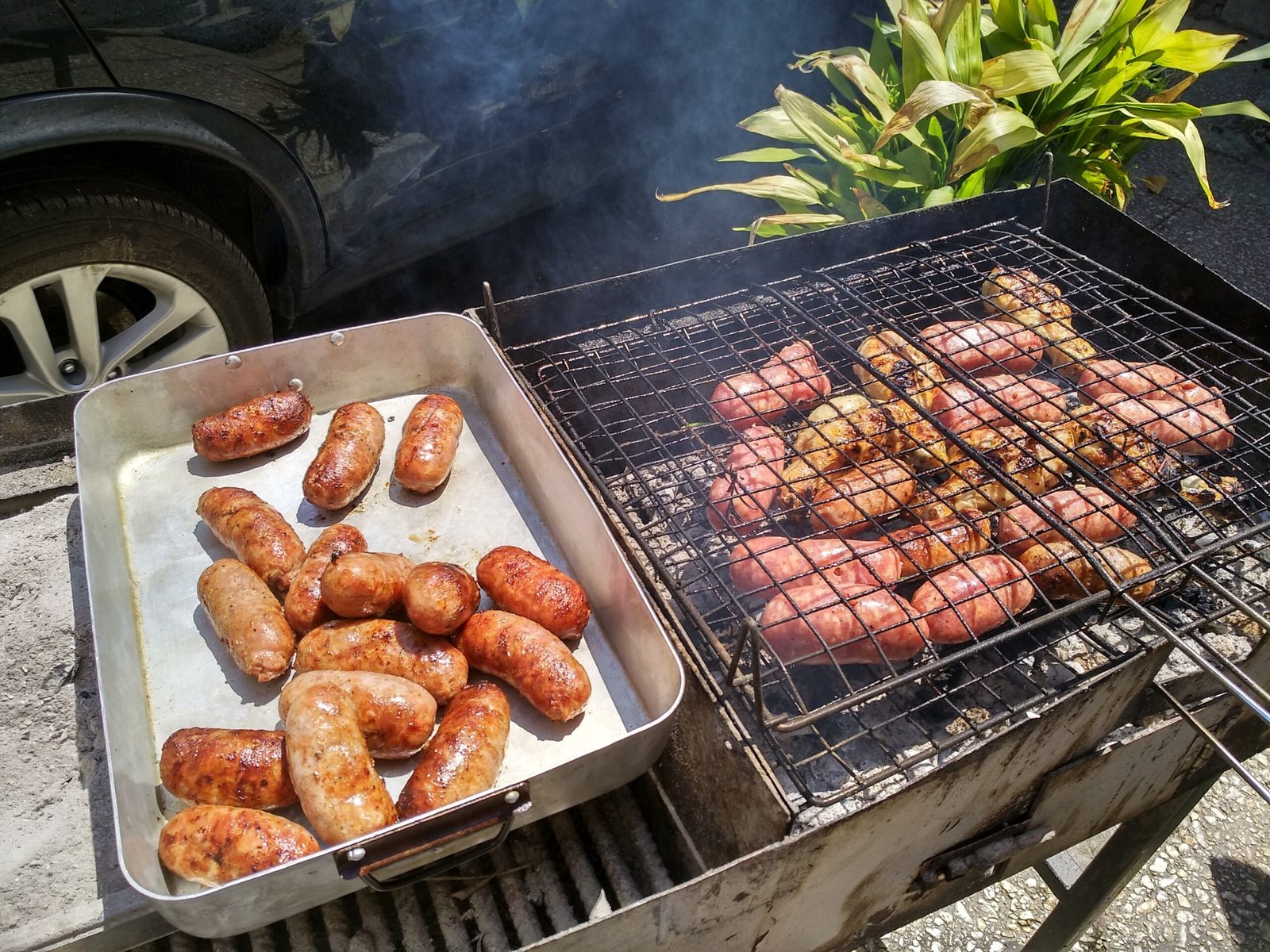
Linguica comes off the fire first, it feeds people while the beef is still going, and it costs very little. It is also the item most likely to be substituted incorrectly at a grocery store.
Shop links on this page: I may earn a commission. Same price for you. As an Amazon Associate I earn from qualifying purchases.
Safety instructions
Cook sausage until the center is 160°F (71°C). Pink pork sausage is still raw.
What Brazilian linguica is
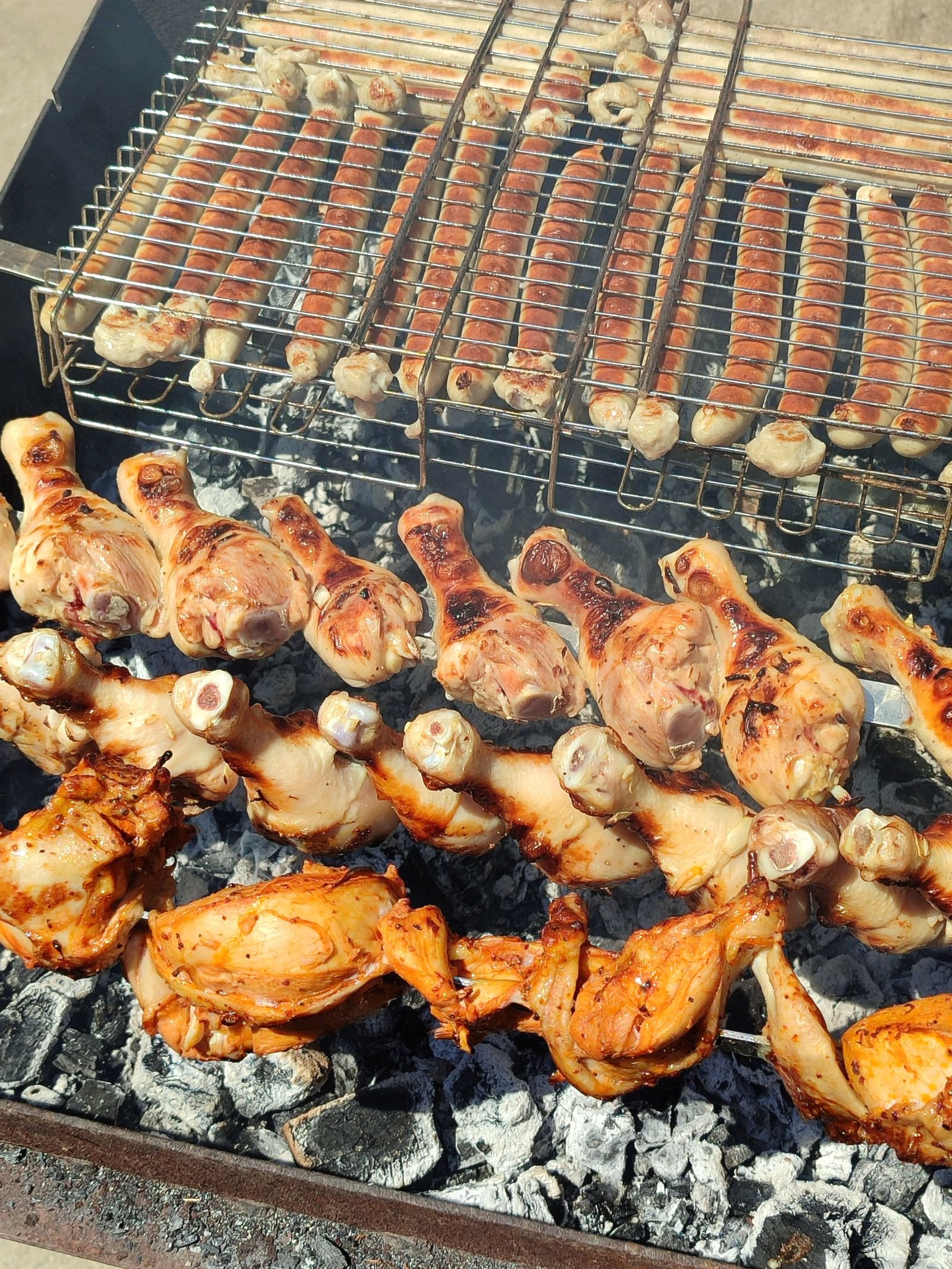
The linguica you want for churrasco is a fresh pork sausage, not cured and not smoked. The dominant flavor is garlic, backed by coarse salt and fresh cracked pepper, sometimes a little white wine or vinegar, sometimes sweet paprika for color. It is coarse ground, loosely packed, and sold raw in a coil or in links.
Because it is fresh, it must be cooked through. That single fact drives the whole technique and separates it from every beef cut on the grill.
Where to find it in the US
When you go to a Brazilian market, ask for linguica toscana, the plain fresh garlic pork sausage used at churrasco. Linguica calabresa is smoked and spicier and is a different thing used mostly in cooked dishes.
Portuguese markets and, in parts of New England and California, mainstream supermarkets sell a product labeled linguica. That version is usually smoked and cured, closer to a Portuguese sausage, and firmer and tangier than what a churrasco uses. It grills fine and it is a reasonable substitute, but know that it is already cooked and you are only heating it.
Spanish chorizo is not a substitute. Dry-cured Spanish chorizo is a sliceable salami dominated by pimenton. Mexican chorizo is fresh but loose, heavily spiced with chile and vinegar, and falls apart on a grate. Neither tastes like Brazilian linguica.
If nothing local works, mild fresh Italian sausage is the fallback: garlic-forward, little fennel, no chile. It is not Spanish chorizo and it is not kielbasa. Smoked calabresa is a different sausage, used mostly in cooked dishes.
Ingredients
- Fresh linguica toscana (plain fresh garlic pork sausage), a quarter pound (115 g) per adult when it is part of a mixed churrasco
- Mild fresh Italian sausage is the fallback: garlic-forward, little fennel, no chile
A gentler fire than picanha
Beef over coals wants intense heat and a short cook. Fresh sausage wants moderate heat and a longer one. Put linguica directly over a screaming bed of lump charcoal and the casing splits, the fat pours out and flares, the outside blackens, and the center is still raw.
Cook it over medium heat. On a kettle grill with a two-zone fire, that means the cool side, or the edge of the hot side, not the center of the pile. Over a churrasqueira, hang the skewer higher than you would for beef.
Method
- Leave the links whole. Intact casings keep the juices in. If you bought a coil, either leave it coiled and run two long skewers through it crosswise, or cut it into four to six inch (10 to 15 cm) lengths.
- Keep it 35–40 cm (14–16 in) from the embers so the skin does not split. If the grate only gives you 30 cm (12 in), stay there and turn more.
- Set them over medium heat and turn every few minutes. Total time is usually 15 to 25 minutes depending on thickness.
- Cook to 160°F (71°C) internal, measured in the center of the thickest link.
- Rest a couple of minutes, then cut into thick coins or diagonal slices.
Cutting links before they cook, or pricking the casings, lets the fat and juice run out into the fire.
You are looking for even browning, not char. If a casing splits and the fat flares, move the sausage off the flame immediately.
Color and feel lie on fresh pork sausage. This is the reason to own a thermometer.
If you are cooking a lot and want to be certain, you can gently poach the links in barely simmering water for about ten minutes first, then finish on the grill for color. That is a home shortcut, not the traditional method, and it costs you some flavor. It is useful when you are feeding twenty people.
Salt and seasoning
None. Linguica is seasoned in the grind. The coarse-salt rule applies to beef, not to sausage, and salting the outside of an already salted sausage makes it harsh.
Serving
Rest a couple of minutes, then cut into thick coins or diagonal slices. Serve early, while the beef is still on the fire, with farofa and vinagrete and bread. In Brazil it also gets served in a roll as pão com linguiça, with vinagrete on top, which is a good way to handle leftovers.
No barbecue sauce. Vinagrete or nothing.
How you know it is done
The center of the thickest link reads 160°F (71°C) and the cut face shows no pink.
Make-ahead
Cooked linguica keeps well for a few days and goes straight into rice and beans.
Next cooks
- Homemade Brazilian linguica (fresh garlic sausage)
- Garlic bread on the grill (pão de alho)
- Farofa and vinagrete
- How to grill picanha on a kettle grill
What to buy
Fresh linguiça toscana has to hit 160°F (71°C) in the center. Color lies. The usual mid is the meter to get first.
- Low: ThermoWorks ThermoPop 2 — fast enough to pull beef and to know a thigh hit 165°F (74°C).
- Usual mid: CHEF iQ Sense — wireless leave-in probe + hub.
- High: ThermoWorks Thermapen ONE — fast instant-read for spot checks at the fire.
Leave a Reply