
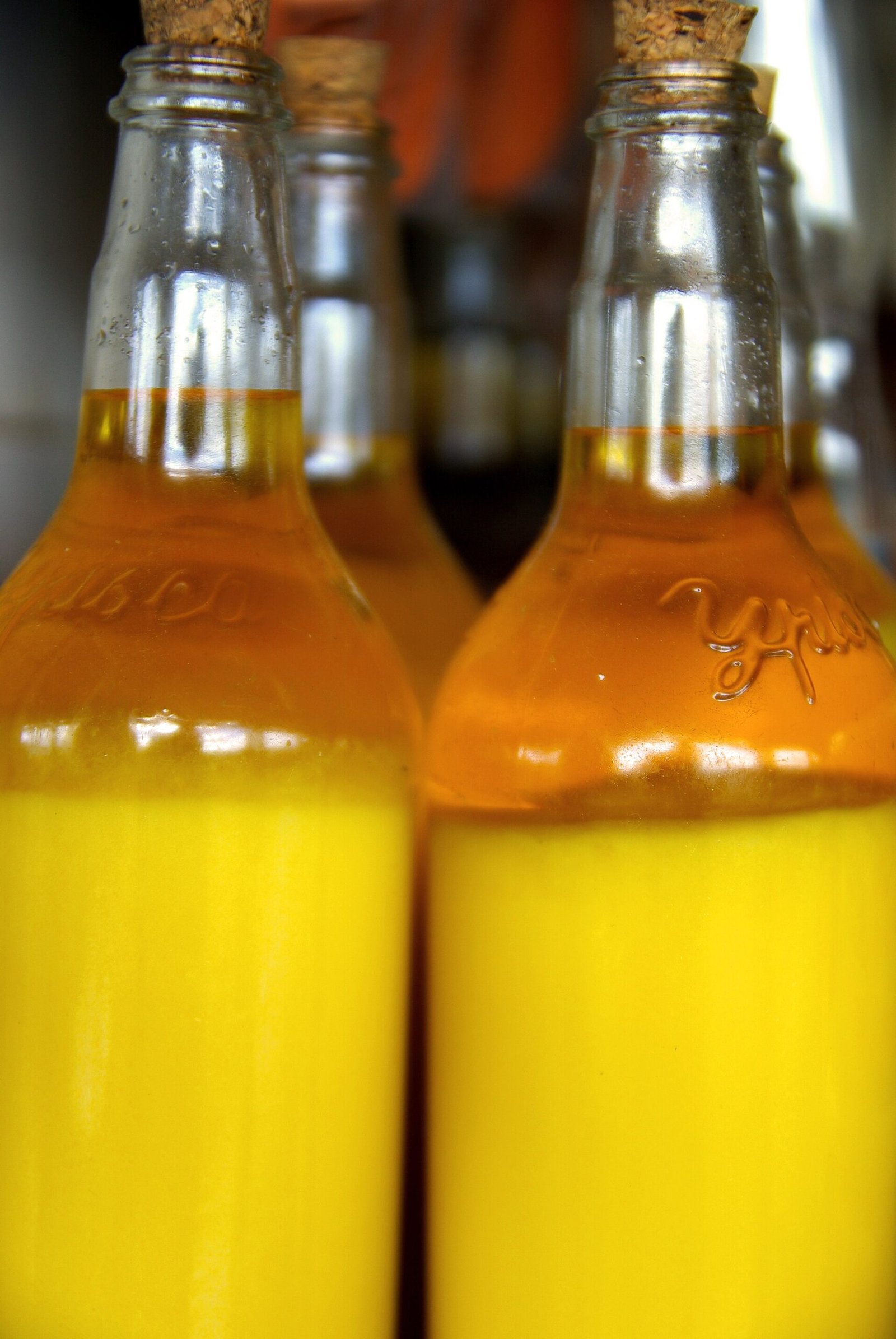
Bottled Brazilian butter (manteiga de garrafa) is the liquid butter of the Nordeste. The same fat is also called manteiga da terra, manteiga do sertão, and manteiga de gado. It stays pourable at room temperature and comes in a glass bottle. It is the fat on carne de sol, macaxeira, cuscuz, baião de dois, and cartola.
What it is
In the sertão, cream is cooked down until the water is gone and the fat is gold. The solids (borra) stay in the pot. The clear fat goes into a clean bottle. That is why it pours. A stick of grocery butter in the US is not this. Melted salted or unsalted butter is the fallback on this site when the bottle is not in the kitchen. A jar labeled ghee is not this bottle, and it is not the name of the dish.
The farm method in Paraíba skims nata from the whey of queijo coalho and salts it over days. That is not a US home method. The home method below starts from unsalted butter and gets the same gold pour for the table.
How it is used
Warm a spoonful and brush it on carne de sol on the fire. Pour it over boiled or fried macaxeira. Put a knob on cuscuz nordestino or cuscuz with carne de sol. Stir it into baião de dois and savory arroz de leite. Fry the plantain for cartola in it. That is the Nordeste plate. It is not a fat for salt-only picanha.
Where to buy it
Start at a Brazilian or Latin market. Ask for manteiga de garrafa, manteiga da terra, or manteiga do sertão. The label is a glass bottle of liquid butter, not a can of solid butter and not a stick from the dairy case.
US online Brazilian grocers list bottles under names such as Sertanorte and Ceará Caju. RememBR and Latinafy have carried those bottles. Stock moves. Check the shop before a trip is planned around one jar. A canned Brazilian butter sold as Aviação is a different product.
If the bottle is not in reach, make the home batch below, or melt salted or unsalted butter for the pot that day.
What to buy
- Low: 1 lb (500 g) unsalted butter, cooked and strained at home
- Usual mid: a bottle from a Brazilian or Latin market
- High: a named Brazilian bottle (Sertanorte or Ceará Caju) from a grocer that ships
Ingredients (about 1 3/4 cups / 400 ml)
- 1 lb (500 g) unsalted butter
- Optional: a pinch of fine salt
- A heavy pot
- A clean, dry glass bottle with a lid
- A cloth, cheesecloth, or paper coffee filter
Method
- Cut the butter into pieces. Put them in a heavy pot over low heat. Stay with the pot.
- Let the butter melt. Stir only a little. White foam rises. Skim it off with a spoon and discard it.
- Keep the heat low. The liquid turns from cloudy to gold and more translucent. The solids at the bottom (borra) go from white to light brown. This takes about 30 to 40 minutes for 1 lb (500 g).
- Take the pot off the heat when the liquid is gold and the solids are brown, not black. Burnt solids make the fat bitter.
- Let it sit 2 minutes so the solids settle. Strain through a cloth or coffee filter into the clean, dry bottle. A pinch of salt can go in the bottle if the table likes it salted.
- Cap the bottle when the fat is no longer hot. Store it closed.
How you know it is done
The pour is gold and clear enough to see through. The solids in the pot are brown, not white and not black. If the fat smells sharp or the solids are burnt, it cooked too hard. Start again on a lower flame.
When it goes on the table / storage
Make the bottle a day ahead. In the sertão the closed bottle often sits at room temperature. In a US kitchen the fridge is fine if the room is warm or the bottle will sit for weeks. It may firm in the cold. Set the bottle in a bowl of warm water to pour. Use a clean, dry spoon every time. Water in the bottle spoils it.
What to leave out
Ghee is a close cousin. If the Brazilian bottle is gone, the homemade pot below is the path. Start from butter, not margarine. Keep the heat low, and strain before you bottle.
Leave a Reply