
A first churrasco often borrows habits from other backyard barbecue. A few of those habits do not fit this fire. Here is what helps instead.
What helps instead
- Leave the fat cap on.
- Salt only on beef. No rub.
- Vinagrete on the table, not barbecue sauce.
- Pull beef around 125 to 130°F (52 to 54°C) and rest.
- Use long flat skewers, not short kebab sticks.
- Costela is open fire, not a wrapped 12-hour cook.
- Serve in rounds. This is not restaurant rodízio.
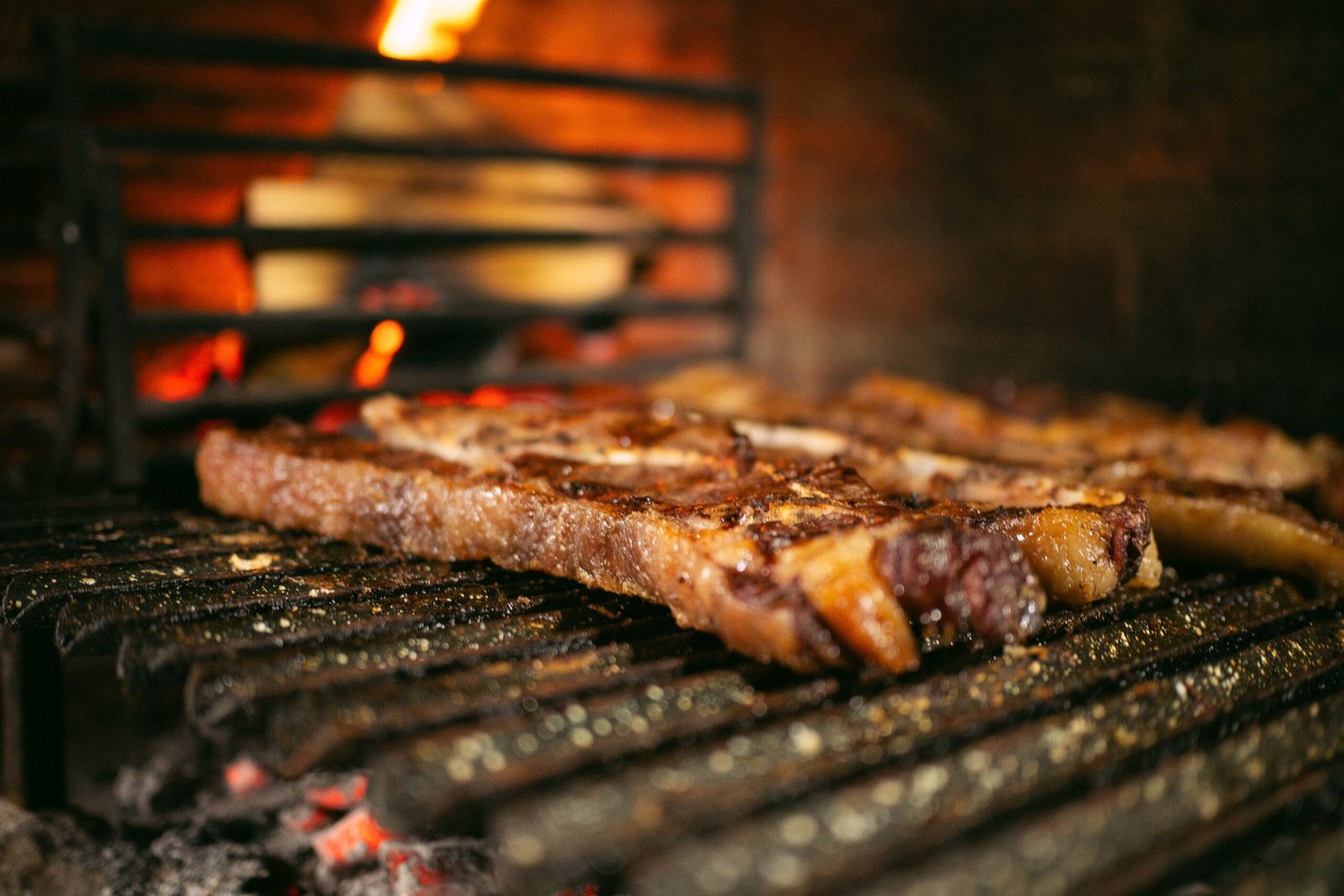
A kettle grill grate often sits around 10 cm (4 in) from the coals, closer than the 30–40 cm (12–16 in) Brazilian beef wants. Use two zones or raise the meat. See how far picanha sits from the charcoal.
Trimming the fat cap off the picanha
This is the most common and the most damaging. A lot of butchery trims fat aggressively, and a lot of cooks are trained to trim what is left. The fat cap on picanha is not excess, it is the cut. It renders over the coals, bastes the meat, and produces the crust and the flavor that make the cut worth its price.
Leave it on. Score it lightly in a crosshatch if it is very thick, no deeper than the fat layer. Buy from a butcher who sells it cap-on, and check the package before you get home, because many US supermarket picanha steaks have already been trimmed.
Applying a rub
Beef at a churrasco gets coarse salt. That is the complete seasoning. No paprika, no brown sugar, no garlic powder, no coffee, no black pepper.
A rub is not a small addition here. Sugar in a rub burns over live coals, and the spice layer sits between the fat and the heat and gets in the way of a clean crust. Salt-only is the churrasco path for beef; a rub makes a different dish — tasty, just not this one.
Reaching for barbecue sauce
There is no sauce course in Brazilian barbecue. Nothing sweet, nothing tomato-and-vinegar-and-molasses, nothing brushed on during the cook.
What goes on the table is vinagrete, which is diced tomato, onion, and often bell pepper in vinegar and oil with salt, spooned over meat or eaten alongside. It is bright and acidic and it exists to cut fat, not to add sweetness.
Overcooking the beef
Picanha, fraldinha, and alcatra are usually served rare to medium rare in Brazil, roughly 125 to 135°F (52 to 57°C). Past that they dry out and the fat cap has less to give — still welcome if someone at the table prefers it more done.
Safety instructions
Rare beef at 125 to 130°F (52 to 54°C) is below the USDA 145°F (63°C) finish. Buy whole muscle from a butcher or a named packer, and sear the outside. Higher-risk people should wait for 145°F (63°C). Ground beef stays 160°F (71°C).
Use an instant-read thermometer rather than time or feel. Pull five degrees below your target and rest. If a guest wants theirs more done, offer the outer slices, which are always more cooked, or give that piece a little more time — rather than cooking the whole roast well done for one person.
Using short kebab skewers
The ten-inch skewers sold for kebabs are the wrong tool. Churrasco uses long flat sword skewers, typically two to three feet, with a wide blade that keeps meat from spinning and a handle that stays out of the fire.
The length lets you hold meat beside embers at a distance you control and turn a whole picanha as a unit. Short round skewers spin, put your hand over the coals, and force you to cut the meat into small pieces, which changes the cook entirely. Buy proper long flat skewers if you are cooking over coals.
Treating it like pulled pork
Churrasco is fast, hot, and open. It is not low and slow. Picanha takes about thirty minutes, fraldinha fifteen, linguica twenty. Even costela, the long cut, is a few hours over embers, not twelve hours in a closed smoker.
There is no wrapping, no stall, no shredding, no resting overnight in a cooler. Sliced against the grain, served immediately, in rounds.
Trying to run a rodizio at home
A churrascaria has a wall of fire, a rotating rack, and staff. You have a kettle grill. Attempting fifteen cuts in continuous rotation for twelve guests means everything arrives lukewarm and you never sit down.
Cook three or four things well in sequence. Sausage and cheese first, beef in the middle, garlic bread at the end. That is home cooking, and it is the version worth learning.
What to buy
A thermometer, long flat skewers, and a long flat slicer stop the usual wrecks. Tools and meters are on What to buy.
Next cooks
Region: Across Brazil.
Leave a Reply