
Fraldinha is the cut that convinces people churrasco is not just about picanha. It has more beef flavor than the cap and it cooks fast. One friendly note on the name: fraldinha is sirloin flap (also called flap meat or bavette). Flank is the fallback cut when flap is not on the case — not the muscle name itself.
At a glance
- Region: Sul
- Yield: a 2 to 3 lb (0.9 to 1.4 kg) piece feeds 4 to 6 as part of a mixed grill
- Time: 10 to 20 minutes over a hot fire, plus 5 to 10 minutes rest
- Gear: lump charcoal, two-zone kettle grill or long skewer, instant-read thermometer
- Ask for: sirloin flap, flap meat, or bavette. A Brazilian shop may already have fraldinha. Flank is the fallback.
Shop links on this page: I may earn a commission. Same price for you. As an Amazon Associate I earn from qualifying purchases.
What you are actually buying
Sirloin flap (fraldinha), also called flap meat or bavette, comes from the bottom sirloin. In some markets it sits near flank steak, which is why the two get conflated. If they do not have flap, flank works. Sirloin tip is a different muscle.
Flap is closer to fraldinha than flank is. It is thicker, looser grained, and better marbled. Flank is leaner, flatter, and tighter. If your store has flap meat, buy that. If it only has flank, flank will work as a stand-in and you should cook it slightly less.
A whole fraldinha runs roughly 2 to 3 pounds and is an uneven wedge, thicker at one end. Leave the exterior fat that comes with it. Trim only hard gristle or silverskin.
This is not brisket
Fraldinha is a fast, hot cut. It has enough intramuscular fat to stay juicy at medium rare and not nearly enough connective tissue to reward twelve hours at 250°F (120°C). Cook it low and slow and you get gray, dry, stringy meat.
Seasoning
Coarse salt, applied just before cooking, pressed onto both sides. Nothing else. No rub, no marinade, no BBQ sauce. Fraldinha has enough of its own flavor that covering it is a loss.
Use coarse kosher salt or sal grosso. Measure it: 1 tablespoon, about 15 g (1 colher de sopa) of sal grosso per quilo (1 kg/ 2.2 lb) of meat, the 10 to 15 g per kg band Brazilian churrasco guides use. In the US, 1 tablespoon Morton kosher or 1 1/2 tablespoons Diamond Crystal per quilo, not per pound. Knock the excess off after the cook, before slicing, which is why the coat looks heavy going on.
Cooking it over coals
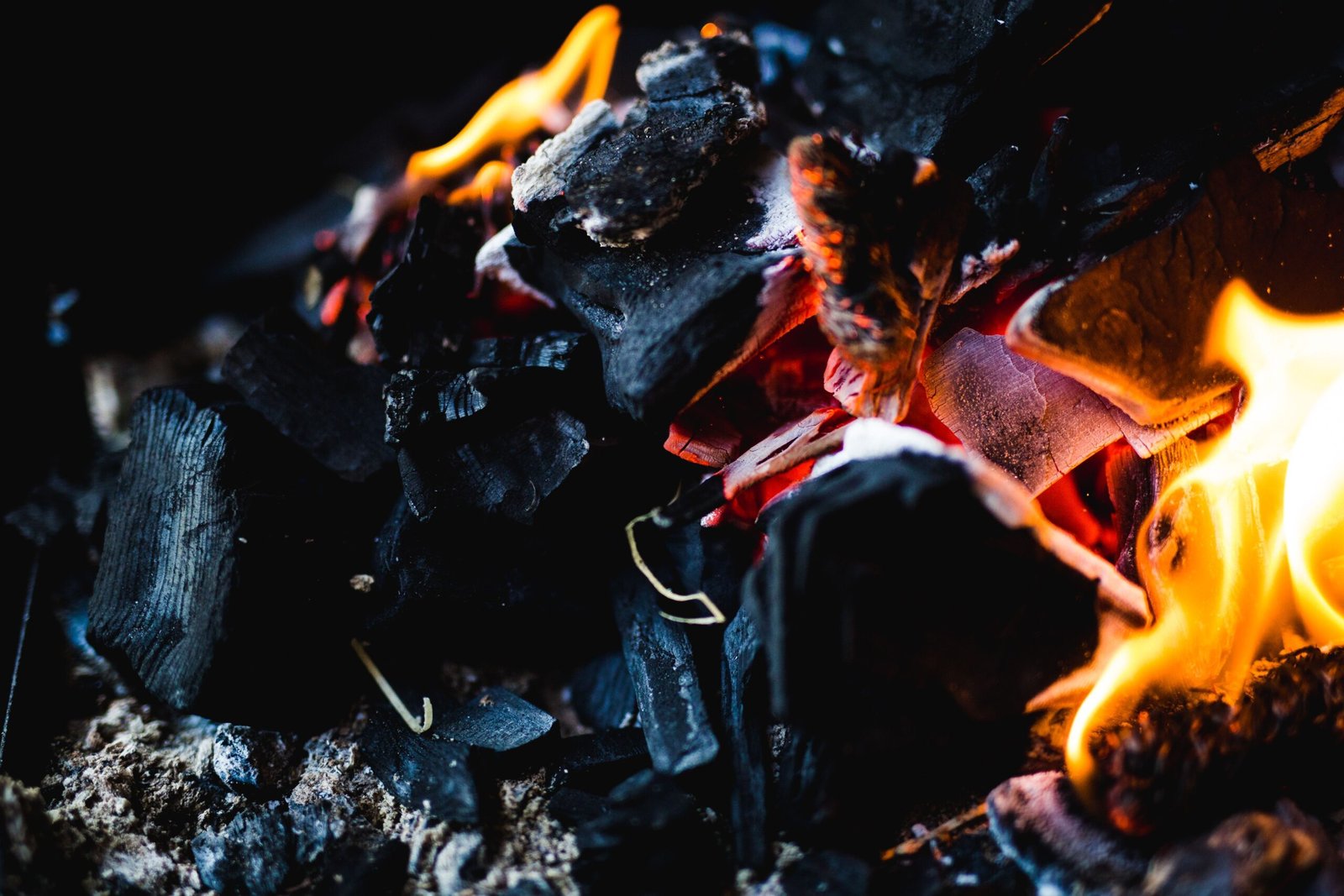
Build a hot bed of lump charcoal (100% wood lump), not briquettes, and let it ash over. If you are skewering, fold the piece onto a long skewer in a loose accordion so it holds shape, and cook it about 30–40 cm (12–16 in) from the embers. Turn it when the first side has a dark crust.
The numbers for the other beef cuts are in how far picanha sits from the charcoal.
On a kettle grill, run a two-zone fire and sear directly over the hot side. Because the cut is uneven, put the thick end toward the hottest coals and the thin end toward the cool side. Move pieces, not coals.
You want a hard crust and a rare to medium rare interior. Pull at about 125 to 130°F (52 to 54°C) for medium rare, checked at the thickest point with an instant-read thermometer. It will climb several degrees while resting. Past about 140°F (60°C) the cut turns noticeably chewy.
Safety instructions
Rare beef at 125 to 130°F (52 to 54°C) is below the USDA 145°F (63°C) finish. Buy whole muscle from a butcher or a named packer, and sear the outside. Higher-risk people should wait for 145°F (63°C). Ground beef stays 160°F (71°C).
On gas, preheat everything as hot as it goes, sear on the hot side, and move to the unlit side to finish if the outside is getting ahead. Expect a lighter crust.
Resting and slicing
Rest five to ten minutes on a cutting board. Knock off the excess salt while it rests.
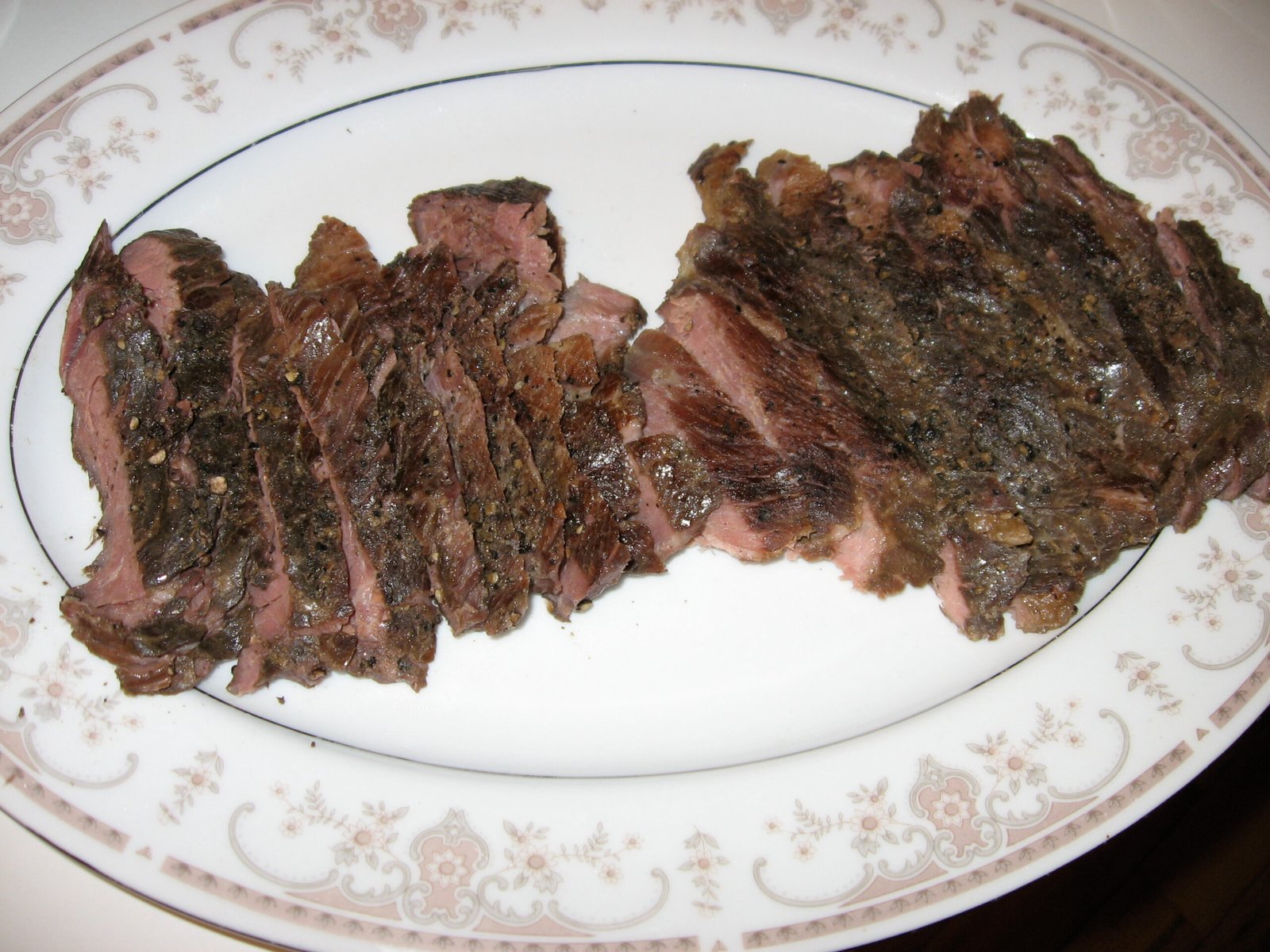
Slicing is where fraldinha is won or lost. The grain is coarse, visible, and it changes direction across the piece. Look at the surface, find the direction the fibers run, and cut across them at a slight angle with a long flat slicer. Rotate the board as the grain shifts.
Slices should be about a quarter inch thick. Cut with the grain and even a perfectly cooked fraldinha will be tough enough that people will assume you overcooked it.
On the table
Vinagrete, farofa, rice. Not barbecue sauce.
Serve it in rounds as it comes off the fire rather than piling the whole cut on a platter. Fraldinha is best in the first few minutes after slicing.
What it costs and why it is worth it
Flap meat in most US markets is a fraction of the price of picanha. For a mixed churrasco, running two pounds of fraldinha next to three pounds of picanha gives the table two distinct beef experiences and cuts the total cost noticeably. Several people will tell you they preferred the cheaper cut.
What to buy
Coarse salt on the meat, a thermometer in the thick end. The usual mid is the one to get first. The full kit is on What to buy.
Salt
- Low: Morton Coarse Kosher — the box that always works on the fire.
- Usual mid: Diamond Crystal kosher — lighter crystals, easier to knock off after the cook. A Brazilian-market bag of sal grosso is better when you find it.
- High: Cisne Sal Grosso — the Brazilian rock salt this fire was built around.
Thermometer
- Low: ThermoWorks ThermoPop 2 — fast enough to pull beef and to know a thigh hit 165°F (74°C).
- Usual mid: CHEF iQ Sense — wireless leave-in probe + hub.
- High: ThermoWorks Thermapen ONE — fast instant-read for spot checks at the fire.
Next cooks
- How to grill picanha on a kettle grill
- Sal grosso vs kosher salt
- Toasted cassava flour (farofa) and Brazilian tomato-onion sauce (vinagrete)
- Brazilian churrasco cuts beyond picanha (including fraldinha)
- Fraldinha seasoned with sal grosso only
Region: Sul.
Leave a Reply