
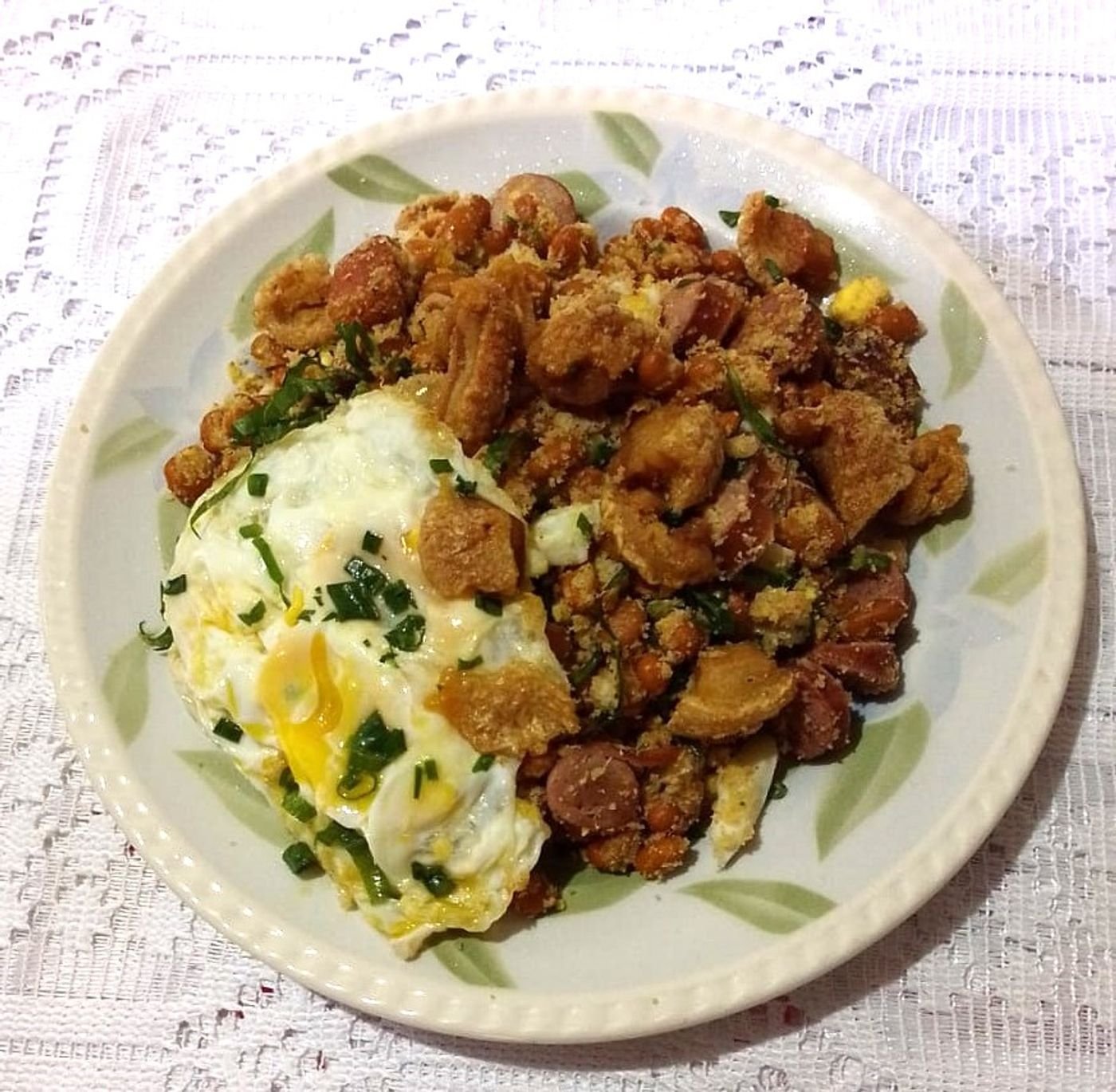
Tropeiro beans (feijão tropeiro) are a Minas Gerais pot: cooked beans, dry cassava flour (farinha de mandioca), fresh pale garlic pork sausage (linguiça toscana), bacon or fried pork belly cubes (torresmo), scrambled egg, onion, and cheiro-verde (parsley and green onion). The muleteers (tropeiros) carried beans and farinha. The pot is dry and mixed, not a soup. It shows up at a Minas churrasco next to the meat, not instead of farofa.
Shop links on this page: I may earn a commission. Same price for you. As an Amazon Associate I earn from qualifying purchases.
Which beans and which flour
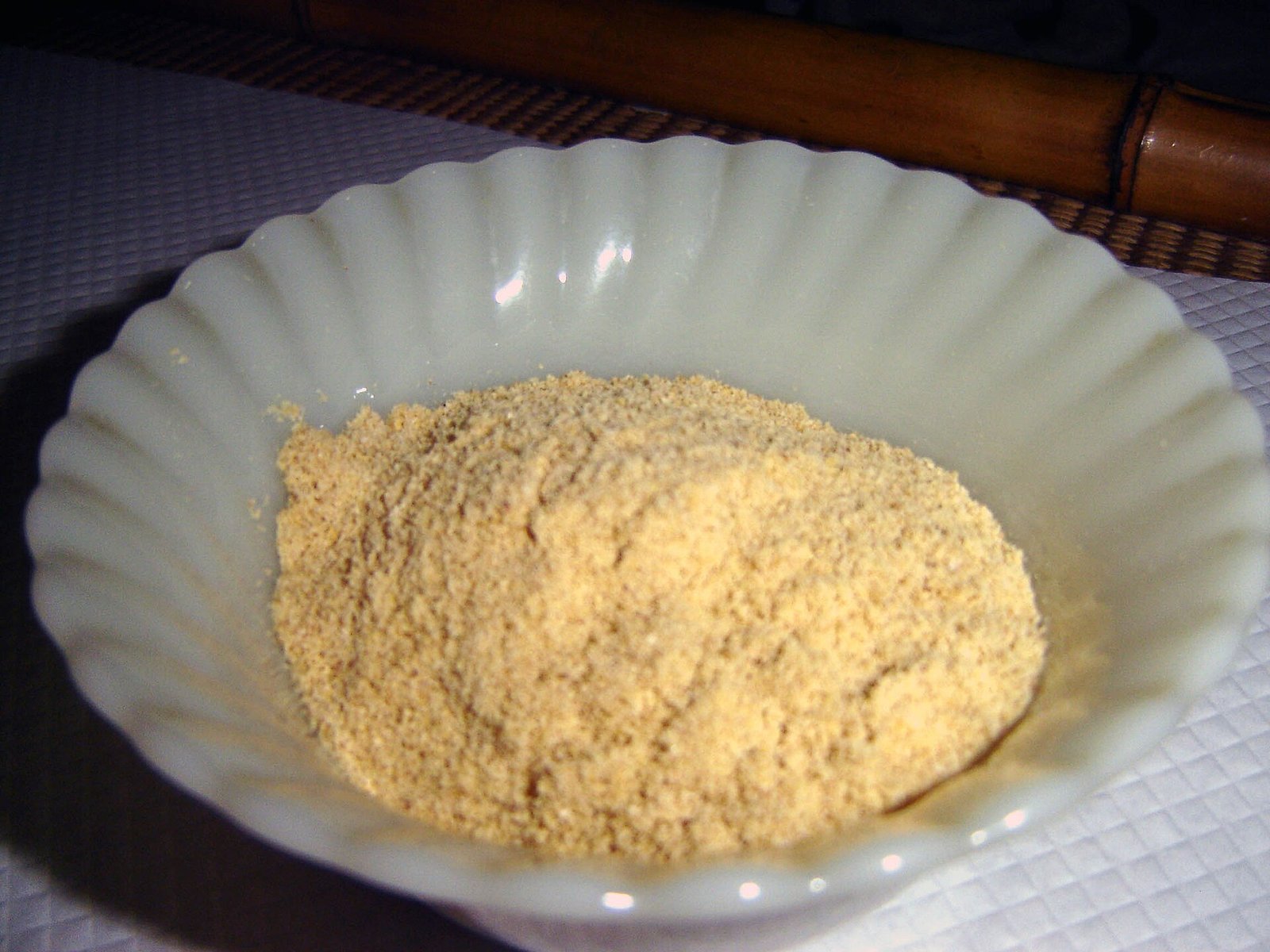
The bean is feijão carioca, the beige Brazilian bean. In a US store that is pinto. Black beans belong in another pot (feijoada). Farinha de mandioca is dry cassava flour from a Brazilian or Latin market, or Amazon — not tapioca starch, which turns gluey.
When you go to a Brazilian market, ask for linguiça toscana, the fresh garlic pork sausage. If the case only has mild fresh Italian sausage with little fennel and no chile, that works. Bacon from the supermarket is fine. Torresmo from a Brazilian shop is better if you have it; the post on fried pork belly cubes is here: torresmo.
Ingredients (about 6 sides)
- 3 cups (500 g) cooked pinto beans, drained, some broth reserved
- 1 1/2 cups (180 g) farinha de mandioca
- 8 oz (225 g) linguiça toscana, sliced into coins
- 4 oz (115 g) bacon, diced, or crumbled torresmo
- 3 eggs
- 1 medium onion, minced
- 2 garlic cloves, minced
- 1/2 cup (120 ml) chopped cheiro-verde (parsley and green onion)
- 1/2 teaspoon (2 g) fine salt, then taste — the sausage and bacon already carry salt
Method
Cook the beans ahead until tender but whole. Drain, and keep half a cup of the broth.
In a wide skillet, render the bacon. Add the linguiça and cook the coins until they hit 160°F (71°C) in the center; color alone is not enough. Push the meat aside, cook the onion until soft, then the garlic for 30 seconds. Scramble the eggs in the same fat until just set, then break them into large pieces.
Add the beans and a splash of broth so they are moist, not swimming. Sprinkle the farinha in while you stir, a handful at a time, until the pot is dry and sandy and the flour has toasted, 3 to 5 minutes. Taste. Fold in the cheiro-verde off the heat.
At the barbecue
Make it while the meat rests, or earlier and reheat on low with a spoon of broth so the farinha does not scorch. Serve hot, in a bowl. In Minas, thinly sliced collard greens (couve) often sit next to this pot. Farofa is still welcome; this is not a replacement for it. Vinagrete still belongs on the meat.
This is a skillet pot, not a grate cook.
What to buy
Farinha is the one pantry item you have to seek out. The usual mid is the bag to get first. Tapioca starch is a different product.
- Low: Yoki farinha de mandioca — real cassava flour, not tapioca starch, and a bag you can actually find.
- Usual mid: Amafil farinha de mandioca — the usual mid when the Brazilian market has it.
- High: Amafil or Yoki farinha de mandioca torrada from a Brazilian grocer — the toasted bag if they stock it, not a luxury brand invented for this page.
Next cooks
Region: Minas / Sudeste.
Leave a Reply